

Napoleon Abdicates: Waterloo Ends Two Decades of War
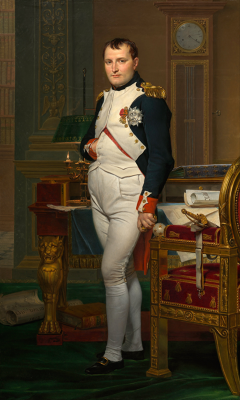
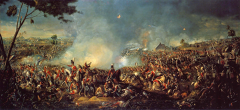
Four days after the bloodiest battle of the nineteenth century, the man who had dominated European politics for two decades sat down to write his final abdication. Napoleon Bonaparte resigned the French throne on June 22, 1815, forced out by a hostile parliament and the approaching armies of Britain and Prussia. His defeat at Waterloo on June 18 had cost him roughly 25,000 dead and wounded and destroyed the army he had rebuilt during his Hundred Days return from exile. Napoleon had escaped from Elba in February 1815, landing in southern France with about a thousand men and marching to Paris as entire regiments defected to his side. Louis XVIII fled, and Napoleon resumed power without firing a shot. But the allied powers of Britain, Prussia, Austria, and Russia immediately declared war and began assembling armies to crush him. Napoleon struck first, invading Belgium to defeat the British and Prussian armies before they could unite. At Waterloo, a combination of delayed attacks, muddy terrain, and the timely arrival of Prussian reinforcements under Blücher turned Napoleon’s offensive into a catastrophe. His Imperial Guard, committed as a final reserve, broke and ran for the first time in its history. Napoleon returned to Paris hoping to raise a new army, but both chambers of parliament demanded his resignation. He abdicated in favor of his young son, though the allies had no intention of honoring the succession. Napoleon surrendered to the British and was exiled to Saint Helena, a remote island in the South Atlantic, where he spent his final six years dictating memoirs and cultivating the legend that would make him more powerful in death than in his last years of life.
June 22, 1815
211 years ago
Key Figures & Places
What Else Happened on June 22
Ptolemy IV deployed 20,000 native Egyptian soldiers alongside his Greek troops to defeat Antiochus III's larger Seleucid army at Raphia, preserving Egyptian con…
Perseus had 44,000 men and the most feared infantry formation in the ancient world — the Macedonian phalanx. He lost anyway, in about an hour. Aemilius Paullus …
Bishops gathered in Ephesus to condemn Nestorius, formalizing the doctrine that Mary should be venerated as Theotokos, or Mother of God. This theological ruling…
Krum didn't just win a battle at Versinikia — he humiliated an empire. The Bulgarian khan smashed Michael I's forces so completely near Edirne that Michael went…
The Hungarians weren't supposed to win. They'd been raiding deep into Frankish territory for years — fast, mounted, terrifying — and the East Franks finally sen…
Fatahillah drove Portuguese forces from the port of Sunda Kelapa, renaming the settlement Jayakarta to celebrate his victory. This decisive expulsion ended Euro…
Talk to History
Have a conversation with historical figures who witnessed this era. Ask questions, explore perspectives, and bring history to life.