Ali Refuses Draft: Conscience Over Military Service
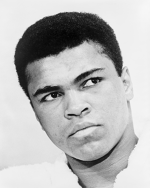
Muhammad Ali was convicted of draft evasion in a Houston federal court on June 20, 1967, stripped of his heavyweight championship, and sentenced to five years in prison. The conviction came fifty-two days after Ali refused induction into the U.S. Army at the Houston Armed Forces Examining and Entrance Station, telling officials: "I ain't got no quarrel with them Viet Cong." The jury deliberated for twenty-one minutes. Ali was twenty-five years old and at the peak of his athletic career. Ali had applied for conscientious objector status based on his membership in the Nation of Islam, which opposed the Vietnam War. His local draft board in Louisville denied the application, and the Justice Department overruled a hearing officer who had recommended approval. Ali's refusal was not passive resistance. He spoke publicly and repeatedly against the war, arguing that Black Americans were being asked to fight for freedoms they did not enjoy at home. His stance cost him his boxing license in every state, his passport, and three and a half prime years of his career. The response to Ali's conviction split sharply along racial and generational lines. Much of white America viewed him as a cowardly draft dodger trading on celebrity to avoid service. Many Black Americans and antiwar activists saw him as a principled figure willing to sacrifice everything for his beliefs. Ali was not imprisoned during his appeal and spent the years between 1967 and 1970 speaking on college campuses and at antiwar rallies, becoming one of the most visible opponents of the Vietnam War. The Supreme Court unanimously overturned Ali's conviction on June 28, 1971, in Clay v. United States, finding that the Justice Department had improperly advised the appeal board. Ali returned to boxing in 1970 and fought in some of the most celebrated bouts in history, including the "Fight of the Century" against Joe Frazier and the "Rumble in the Jungle" against George Foreman. His stand against the draft became, in retrospect, one of the defining acts of moral courage in twentieth-century American life.
June 20, 1967
59 years ago
Key Figures & Places
What Else Happened on June 20
Attila the Hun lost a battle he never actually lost. At the Catalaunian Plains in modern-day France, somewhere between 150,000 and 300,000 men clashed in one of…
Prince Mochihito’s failed bid for the throne ignited the First Battle of Uji, pitting the Taira clan against the Minamoto. This clash shattered the fragile peac…
Oxford didn't start with a charter. It started with a fight. English scholars got expelled from Paris around 1167 — a diplomatic spat between Henry II and Louis…
The War of the Sicilian Vespers started with a bell. Easter Monday, 1282 — Sicilians massacred thousands of French soldiers in a single night, then handed the i…
Christian of Brunswick led 15,000 Protestant troops toward the Main River at Höchst — and walked straight into a trap. Tilly's Catholic League forces were waiti…
Algerian pirates raided the coastal village of Baltimore, County Cork, kidnapping over 100 villagers to sell into North African slave markets. This brutal assau…
Talk to History
Have a conversation with historical figures who witnessed this era. Ask questions, explore perspectives, and bring history to life.