Gandhi Declares Emergency: India's Democracy Curtailed
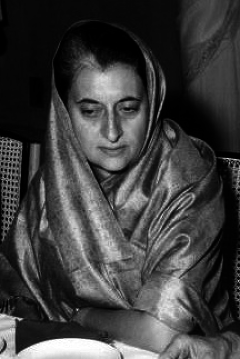
The Allahabad High Court found Prime Minister Indira Gandhi guilty of electoral fraud on June 12, 1975, for using government resources and officials to win her 1971 parliamentary campaign. Justice Jagmohan Lal Sinha ruled that Gandhi had illegally employed a government servant, Yashpal Kapoor, as an election agent before his formal resignation from civil service, and had used state police and public works officials to arrange rallies. The verdict voided her election and barred her from holding elected office for six years. Gandhi had dominated Indian politics since becoming prime minister in 1966. Her 1971 landslide victory, fought on the slogan "Garibi Hatao" (Remove Poverty), gave her Congress Party a two-thirds parliamentary majority. The election fraud case, filed by her defeated opponent Raj Narain, had been working through courts for four years when Sinha delivered his verdict. The ruling sent shockwaves through Indian politics, as opposition parties and student movements immediately demanded her resignation. Rather than step down, Gandhi appealed to the Supreme Court, which granted a conditional stay allowing her to remain in office but not vote in Parliament. Facing mounting protests led by Jayaprakash Narayan and a general atmosphere of political crisis, Gandhi advised President Fakhruddin Ali Ahmed to declare a state of emergency on June 25, 1975. The Emergency lasted twenty-one months, during which civil liberties were suspended, press censorship was imposed, opposition leaders were jailed, and a forced sterilization program affected millions. The Emergency remains the most serious suspension of democratic governance in independent India's history. Gandhi called elections in 1977 and was voted out decisively, though she returned to power in 1980.
June 12, 1975
51 years ago
Key Figures & Places
What Else Happened on June 12
The Hungarians were running away. That's what Louis the Child's army thought. They chased the retreating Magyar horsemen straight into a trap — and the East Fra…
Qutb ud-Din Aibak established the Delhi Sultanate after the assassination of his predecessor, Muhammad Ghori, shifting the center of Islamic political power fro…
A Christian monk walked into a debate he was guaranteed to win. Nicholas Donin had converted from Judaism and handed the Church a list of 35 charges against the…
Thousands of armed peasants converged on Blackheath, demanding an end to serfdom and the abolition of poll taxes that crippled the rural poor. This massive mobi…
The prisoners never had a chance. On a single night in 1418, Parisian mobs tore through the city targeting anyone connected to Bernard VII, Count of Armagnac — …
The gates of Paris swung open from the inside. That's the part people miss — nobody stormed the city. A group of Burgundian sympathizers, led by agents of John …
Talk to History
Have a conversation with historical figures who witnessed this era. Ask questions, explore perspectives, and bring history to life.