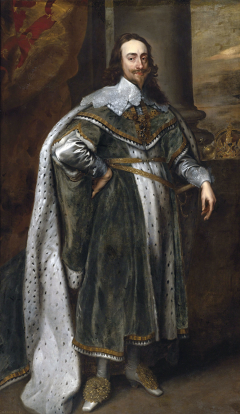
King Charles I Dies: The Crown Falls in Regicide
King Charles I walked through the Banqueting House at Whitehall and stepped onto a scaffold erected outside its windows on January 30, 1649. He wore two shirts, so that the cold January air would not make him shiver and give the crowd the impression he was afraid. At approximately 2:00 p.m., the executioner''s axe fell, and England became the first major European nation to put its own king to death through a formal judicial process. The execution was the climax of a constitutional crisis that had consumed England for nearly a decade. Charles had ruled without Parliament for eleven years (the "Personal Rule"), attempted to impose Anglican worship on Presbyterian Scotland, and fought a civil war against Parliament that killed an estimated 200,000 people—roughly 4 percent of England''s population. Captured by Parliamentary forces in 1646, Charles repeatedly refused to accept constitutional limitations on royal power, negotiated secretly with the Scots for a second war, and was seen by his captors as an untrustworthy tyrant who would never stop plotting to regain absolute authority. The trial, held in Westminster Hall beginning January 20, was unprecedented. Parliament had created a High Court of Justice specifically for the purpose, and 67 of the 135 appointed commissioners signed the death warrant. Charles refused to enter a plea, arguing that no court had jurisdiction over a divinely anointed king. His prosecutor, John Cook, charged him with treason against the people of England—the first time an English sovereign had been accused of betraying the nation rather than the other way around. The regicide sent shockwaves across Europe. No monarch was safe if Parliament could execute a king. Royalist propaganda transformed Charles into a martyr; the Eikon Basilike, published days after his death and purportedly written by Charles himself, became a bestseller. The English Republic that replaced the monarchy lasted only eleven years before Charles''s son was restored to the throne in 1660. But the precedent was permanent: the execution established that English kings ruled by law, not by divine right, and that sovereignty ultimately resided in the people and their representatives.
January 30, 1649
377 years ago
Key Figures & Places

What Else Happened on January 30
Two kingdoms, exhausted from decades of border skirmishes, finally exhaled. The Peace of Bautzen wasn't just ink on parchment—it was Bolesław the Brave of Polan…
Bolesław I the Brave secured his western borders by signing the Peace of Bautzen with Holy Roman Emperor Henry II. This treaty ended sixteen years of brutal war…
King Wareru seized power in Martaban, declaring independence from the crumbling Pagan Kingdom to establish the Hanthawaddy Kingdom. This bold break from central…
A wall of water rose without warning. Twelve-foot waves crashed through villages between Bristol and Wales, sweeping away entire communities in minutes. Farmers…
The Treaties of Munster and Osnabruck, signed on January 30, 1648, ended the Eighty Years' War by compelling Spain to formally recognize Dutch independence afte…
He walked out onto a scaffold wearing two shirts—one to prevent shivering in the cold, the other so nobody would mistake his trembling for fear. King Charles I,…
Talk to History
Have a conversation with historical figures who witnessed this era. Ask questions, explore perspectives, and bring history to life.