Albright Breaks Glass Ceiling: First Female Secretary of State
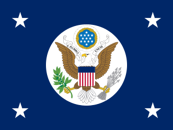
Madeleine Albright shattered a 208-year-old barrier when the Senate confirmed her 99-0 as the 64th Secretary of State on January 22, 1997. Born Marie Jana Korbelová in Prague in 1937, she had fled the Nazis as a toddler, survived the Communist takeover of Czechoslovakia, and immigrated to the United States at age 11. No woman had ever held the position that put her fourth in the line of presidential succession. President Bill Clinton nominated Albright after his 1996 re-election, elevating her from her role as U.S. Ambassador to the United Nations. At the UN, she had already established herself as one of the most forceful voices in American diplomacy, famously challenging Joint Chiefs Chairman Colin Powell by asking, "What''s the point of having this superb military if we can''t use it?" Her hawkish stance on intervention in Bosnia helped push the administration toward the 1995 Dayton Accords. As Secretary of State, Albright championed NATO expansion into Eastern Europe, bringing Poland, Hungary, and the Czech Republic into the alliance in 1999—a move that remade the security architecture of the continent. She pushed for military intervention in Kosovo to stop Serbian ethnic cleansing, navigated the aftermath of the 1998 U.S. embassy bombings in Kenya and Tanzania, and maintained pressure on Saddam Hussein''s Iraq. Her tenure coincided with the brief unipolar moment when American power seemed unchallenged. Shortly after taking office, Albright discovered that her family was Jewish and that three of her grandparents had died in the Holocaust—a revelation that became international news. The discovery added a deeply personal dimension to her already fierce commitment to human rights and democratic values. Her confirmation opened a door that has since been walked through by Condoleezza Rice, Hillary Clinton, and others, permanently altering what the highest levels of American power look like.
January 22, 1997
29 years ago
Key Figures & Places

What Else Happened on January 22
Emperor Justinian I forced Patriarch Eutychius into exile, replacing him with the more compliant John Scholasticus. This power play solidified imperial control …
Twelve months old and already wearing imperial purple. Constantine was less a ruler and more a political chess piece, hoisted onto the Byzantine throne by his f…
The Vikings didn't just win. They crushed the West Saxons so thoroughly that King Æthelred would bleed out from his battle wounds shortly after. Basing was more…
Pope Julius II didn't mess around with security. These weren't just soldiers—they were Alpine mountain fighters, recruited from Swiss cantons known for producin…
The Ottoman cannons roared. Selim I—nicknamed "the Grim"—had been waiting years to crush the Mamluks, those warrior-slaves who'd ruled Egypt for centuries. His …
He was just 21, but Charles V was about to turn medieval German politics into a religious powder keg. The Holy Roman Emperor summoned Martin Luther to explain h…
Talk to History
Have a conversation with historical figures who witnessed this era. Ask questions, explore perspectives, and bring history to life.