

Soviets Invade Afghanistan: A Decade of Suffering Begins
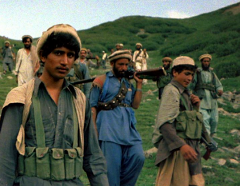
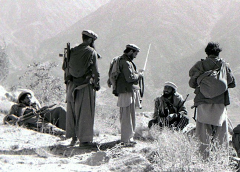
Soviet airborne troops seized Kabul airport on the evening of December 24, 1979, beginning a military intervention that would kill over a million Afghan civilians, drain the Soviet treasury, and set in motion a chain of consequences leading directly to the September 11 attacks two decades later. Within forty-eight hours, special forces from the KGB Alpha Group stormed the Tajbeg Palace and assassinated Afghan President Hafizullah Amin, replacing him with the more compliant Babrak Karmal. The Soviet Politburo had debated the invasion for months. Afghanistan Marxist government, installed by a 1978 coup, was losing control of the countryside to a growing Islamic insurgency. Amin, who had seized power by murdering his predecessor, was proving unpredictable and had made quiet overtures to the United States. Soviet leaders feared losing a client state on their southern border and convinced an ailing Leonid Brezhnev to authorize the intervention despite objections from the military general staff. The United States responded by funneling billions of dollars in weapons and training to the Afghan mujahideen through Pakistan intelligence services in what became the CIA largest covert operation. Saudi Arabia matched American funding dollar for dollar. The war attracted thousands of foreign jihadist volunteers, including a young Saudi named Osama bin Laden, who built training camps near the Pakistani border. The Stinger missile, provided to the mujahideen beginning in 1986, neutralized Soviet helicopter superiority. The last Soviet soldier crossed the Friendship Bridge out of Afghanistan on February 15, 1989, after nearly a decade of fighting that killed 15,000 Soviet troops and an estimated 850,000 to 1.5 million Afghan civilians. The financial and political costs accelerated the Soviet Union collapse. Afghanistan descended into civil war, creating the vacuum the Taliban filled in 1996 and that sheltered al-Qaeda as it planned the September 11 attacks.
December 24, 1979
47 years ago
Key Figures & Places

What Else Happened on December 24
Emperor Wu of Liang elevated his eldest son, Xiao Tong, to heir designate, cementing the succession of the Liang dynasty. This decision ensured the continuity o…
The dome collapsed. Five years of work, gone in seconds. Justinian's architects had pushed Roman engineering to its limit — a dome 180 feet across, floating on …
Several months of vacancy. No pope, no guidance, and Rome's clergy couldn't agree. Then they chose John, a Dalmatian from what's now Croatia — rare for a pontif…
A Syrian priest becomes the first pope from the Eastern Church. John IV takes the throne during a theological bloodbath — the Monothelite controversy has bishop…
Du Fu fled the chaos of the An Lushan Rebellion, seeking refuge in Chengdu under the hospitality of his friend Pei Di. This relocation sparked a period of immen…
Jawhar's Fatimid forces crush the Qarmatians at the gates of Cairo, ending their first invasion attempt and securing the city for the new dynasty. This decisive…
Talk to History
Have a conversation with historical figures who witnessed this era. Ask questions, explore perspectives, and bring history to life.