Superman Debuts: The Birth of the Superhero
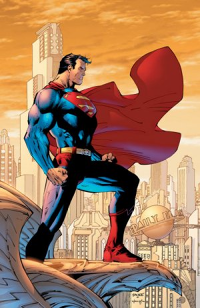
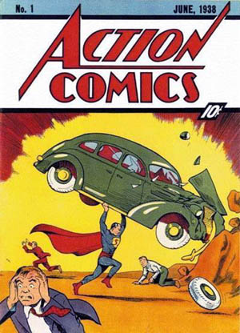
Two teenagers from Cleveland bet everything on a character no publisher wanted. Jerry Siegel and Joe Shuster had shopped Superman around for five years, collecting rejection after rejection, before Detective Comics agreed to pay them $130 for the rights to their creation. Action Comics #1 hit newsstands on June 1, 1938, with a cover showing a caped figure hoisting a green sedan over his head while bystanders fled in terror. The timing mattered as much as the character. Depression-era America craved an invincible champion who fought for ordinary people against corrupt politicians, wife beaters, and war profiteers. Superman was not the gothic avenger that pulp fiction favored. He operated in broad daylight, wore bright primary colors, and smiled. Siegel modeled the alter ego, Clark Kent, on himself: a mild-mannered writer invisible to the people around him, hiding extraordinary ability behind thick glasses. Action Comics #1 sold out its initial print run of 200,000 copies. Within a year, Superman had his own standalone title and a daily newspaper strip reaching twenty million readers. The character generated an estimated $100 million in merchandise by 1941. More importantly, Superman created the superhero genre itself. Batman, Wonder Woman, Captain America, and hundreds of imitators followed within three years, transforming comic books from a reprint medium into America’s dominant form of cheap entertainment. Siegel and Shuster saw almost none of the money. DC Comics enforced its $130 contract for decades, and the two creators spent much of their lives in poverty. The legal battle over Superman’s ownership continued into the twenty-first century, outliving both men. Their creation remains the most recognized fictional character on Earth, a billion-dollar franchise built on the worst deal in entertainment history.
June 1, 1938
88 years ago
Key Figures & Places
What Else Happened on June 1
Praetorian guards executed Didius Julianus in his palace just sixty-six days after he purchased the Roman throne at an auction. His violent end cleared the path…
Hugh Capet wasn't supposed to last. The Carolingian dynasty had ruled France for two centuries, and the nobles who elected Hugh in 987 figured he'd be easy to c…
Rouen didn't fall to a siege. It surrendered because its English defenders simply left. King Philip II Augustus had spent years dismantling the Angevin empire p…
Genghis Khan didn't destroy Zhongdu — he waited. For two years, his forces strangled the city's supply lines until Emperor Xuanzong fled south, abandoning his o…
Alfonso X ascended the throne of Castile and León, inheriting a kingdom poised for expansion. His reign transformed the Iberian Peninsula by codifying the Siete…
The Livonian Order had conquered the Baltic for over a century — crusading knights, fortified castles, total dominance. Then Turaida happened. In 1298, an allia…
Talk to History
Have a conversation with historical figures who witnessed this era. Ask questions, explore perspectives, and bring history to life.