First World Cup Kicks Off: Football Goes Global
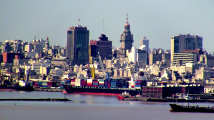
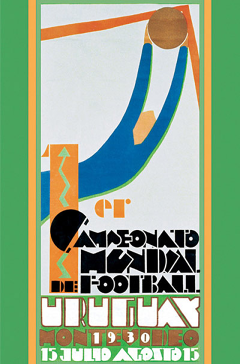
FIFA's grand experiment in international football nearly collapsed before the first whistle blew, as most European nations refused to make the two-week steamship voyage to South America. Only thirteen teams competed in the inaugural World Cup, which kicked off in Montevideo, Uruguay, on July 13, 1930, with just four European sides willing to cross the Atlantic. Romania's King Carol II reportedly selected the squad himself, and the French team's ship picked up the Brazilians in Rio de Janeiro on the way south. Uruguay had lobbied hard to host the tournament, offering to pay all travel expenses and build a new 90,000-seat stadium, the Estadio Centenario, to celebrate the centennial of its constitution. Construction fell behind schedule, and the stadium was not ready until the fifth day of competition. Early matches were played at two smaller Montevideo grounds, Estadio Pocitos and Estadio Parque Central, before crowds that sometimes numbered only a few hundred. The tournament had no qualifying rounds. Teams were divided into four groups, with group winners advancing to the semifinals. Argentina and Uruguay dominated their groups and met in the final on July 30 before a crowd of 93,000. Fans crossed the River Plate from Buenos Aires by the boatload, and police searched spectators for weapons at the gates. Argentina led 2-1 at halftime, but Uruguay scored three times in the second half to win 4-2 and claim the first Jules Rimet Trophy. The aftermath was dramatic. Jubilant crowds in Montevideo fired guns into the air and declared a national holiday. In Buenos Aires, angry fans stoned the Uruguayan embassy. The two football federations broke off relations for years. Despite the chaos, the tournament proved that a world championship could captivate entire nations and generate intense emotional investment. FIFA had found its formula, and the World Cup would grow into the most-watched sporting event on the planet.
July 13, 1930
96 years ago
Key Figures & Places
What Else Happened on July 13
Mario Götze volleyed home a precise strike in the 113th minute to secure Germany’s fourth World Cup title against Argentina. This victory made Germany the first…
English forces captured King William I of Scotland at Alnwick during the Revolt of 1173-1174, forcing him to sign the humiliating Treaty of Falaise. The treaty …
Eight-year-old Alexander III ascended the Scottish throne at Scone, following the sudden death of his father. His reign secured the independence of the Scottish…
Fifty knights in white mantles with red crosses lay dead in a Lithuanian marsh, their horses drowning beside them. The Livonian Order—those German crusaders who…
Zhu Di's forces seized Nanjing on July 13, 1402, compelling the city to surrender without resistance and vanishing the Jianwen Emperor from history. This decisi…
John of Kastav completed his intricate cycle of frescoes in the Holy Trinity Church, immortalizing the Danse Macabre in vivid detail. By depicting figures from …
Talk to History
Have a conversation with historical figures who witnessed this era. Ask questions, explore perspectives, and bring history to life.