

Silent Night Performed for the First Time in an Austrian Church
A young organist and a priest premiered a simple carol during midnight mass at St. Nikolaus to soothe parishioners after a broken bell tower prevented traditional singing. That humble composition soon traveled across oceans to become one of the most recorded songs in human history, uniting generations through its enduring melody.
December 24, 1818
208 years ago
Key Figures & Places

Austria
Wikipedia
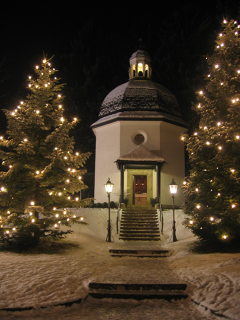
Oberndorf bei Salzburg
Wikipedia
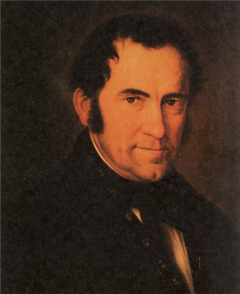
Silent Night
Wikipedia

Silent Night
Wikipedia

Nikolauskirche, Oberndorf
Wikipedia
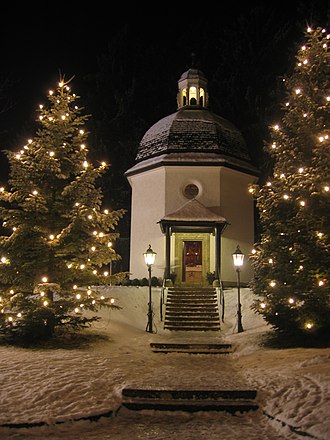
Oberndorf bei Salzburg
Wikipedia

Austrian Empire
Wikipedia

Joseph Mohr
Wikipedia

Stille-Nacht-Kapelle
Wikipedia

Franz Xaver Gruber
Wikipedia

Misa de Gallo
Wikipedia

Oberndorf am Neckar
Wikipedia

Austria
Wikipedia
What Else Happened on December 24
Emperor Wu of Liang elevated his eldest son, Xiao Tong, to heir designate, cementing the succession of the Liang dynasty. This decision ensured the continuity o…

The dome collapsed. Five years of work, gone in seconds. Justinian's architects had pushed Roman engineering to its limit — a dome 180 feet across, floating on …
la iglesia bizantina Santa Sofía en Constantinopla es reconstruida por segunda vez después haber sido destruida por un terremoto.
A Syrian priest becomes the first pope from the Eastern Church. John IV takes the throne during a theological bloodbath — the Monothelite controversy has bishop…
Several months of vacancy. No pope, no guidance, and Rome's clergy couldn't agree. Then they chose John, a Dalmatian from what's now Croatia — rare for a pontif…
Du Fu fled the chaos of the An Lushan Rebellion, seeking refuge in Chengdu under the hospitality of his friend Pei Di. This relocation sparked a period of immen…
Talk to History
Have a conversation with historical figures who witnessed this era. Ask questions, explore perspectives, and bring history to life.