

USSR Creates Top Naval Honors for WWII Heroes
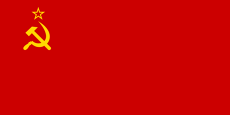
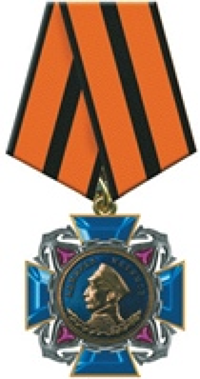
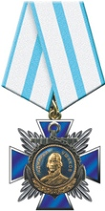
Stalin reached back to the Tsarist Navy for inspiration when he created the Soviet Union's highest naval decorations on March 3, 1944, naming them after two admirals the Bolsheviks had spent decades trying to erase from Russian memory. The Order of Ushakov and the Order of Nakhimov honored Fyodor Ushakov and Pavel Nakhimov, imperial-era commanders who became unlikely Soviet heroes because Stalin needed symbols of Russian naval greatness during the darkest period of World War II. The decision reflected a broader wartime shift in Soviet propaganda. After June 1941, when Germany invaded the Soviet Union, Stalin quietly rehabilitated figures from Russia's pre-revolutionary past who embodied military glory. Alexander Nevsky, Alexander Suvorov, and Mikhail Kutuzov already had military orders named after them. The naval equivalents completed the set, giving the Red Navy its own tradition of heroic ancestors. Fyodor Ushakov, who served under Catherine the Great, never lost a battle in his career and defeated the Ottoman fleet repeatedly in the Black Sea during the 1790s. Pavel Nakhimov destroyed the Ottoman fleet at the Battle of Sinop in 1853 and died defending Sevastopol during the Crimean War. Both represented aggressive, victorious naval warfare — exactly the image Stalin wanted to project as the Soviet fleet engaged German forces in the Baltic and Arctic seas. The Order of Ushakov, in two classes, was awarded for outstanding leadership in naval operations. The Order of Nakhimov recognized excellence in naval defense and the planning of defensive operations. The decorations were designed with enameled medallions bearing the admirals' portraits surrounded by anchors and chains, rendered in gold for the first class and silver for the second. Relatively few of either order were awarded during the war, making them among the rarest Soviet military decorations. The Order of Ushakov First Class was given to only 47 recipients. Stalin's appropriation of Tsarist naval heroes for Communist medals remains one of the war's more ironic cultural reversals.
March 3, 1944
82 years ago
Key Figures & Places




What Else Happened on March 3
Julien Fédon led a coalition of enslaved people and free people of color to seize the towns of Grenville and Gouyave, challenging British colonial rule in Grena…
Gundobad installed his puppet Glycerius as Western Roman Emperor, bypassing the Senate to consolidate his own military control. This maneuver exposed the total …
Empress Genshō stepped down from the Japanese throne to transfer power to her nephew, Shōmu. This transition maintained the stability of the Nara period and ens…
He'd already been patriarch twice, excommunicated twice, and now Photios was back for round three. When Emperor Basil I ratified the Fourth Council of Constanti…
Edward I didn't conquer Wales with armies alone—he conquered it with paperwork. The Statute of Rhuddlan in 1284 replaced Welsh law with English courts, sheriffs…
Emperor Akbar defeated the Bengali army at the Battle of Tukaroi on March 3, 1575, not through military genius alone but because his opponent Daud Khan Karrani …
Talk to History
Have a conversation with historical figures who witnessed this era. Ask questions, explore perspectives, and bring history to life.