

Palladio's Theatre Opens: Renaissance Drama Begins
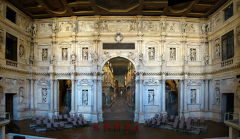
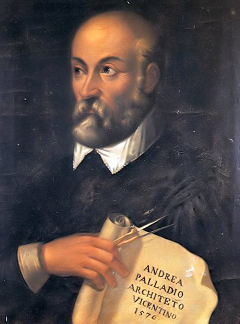
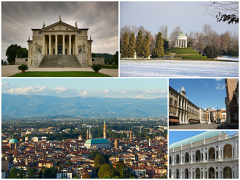
The oldest indoor theater still standing opened its doors in Vicenza, Italy, on March 3, 1585 — five months after the architect who designed it had died. Andrea Palladio's Teatro Olimpico premiered with a production of Sophocles' Oedipus Rex, complete with elaborate perspective stage sets that survive intact today, still creating the illusion of streets receding into infinite distance for anyone who stands in the auditorium. Palladio received the commission from the Accademia Olimpica, a learned society in Vicenza, in 1580. He designed a theater modeled on the ancient Roman theaters described by Vitruvius, with a semicircular seating area rising in steep tiers and an elaborate frons scenae — a permanent architectural backdrop incorporating columns, statues, niches, and three arched openings. Palladio died in August 1580, only months after construction began, and his student Vincenzo Scamozzi completed the building. Scamozzi made the addition that has fascinated visitors for over four centuries: behind the three arched openings of the frons scenae, he constructed angled wooden streets in forced perspective, their buildings and pavement converging to create an astonishing illusion of depth in a space barely seven meters deep. These trompe l'oeil streetscapes, representing the ancient city of Thebes, were originally intended as temporary sets for the inaugural production. They were never removed and remain the oldest surviving stage sets in the world. The theater seats approximately 400 spectators on thirteen rows of wooden benches topped by a colonnade of Corinthian columns. The ceiling was painted to resemble an open sky, furthering the illusion of an outdoor Roman theater. The acoustics, shaped by the elliptical seating plan and wooden construction, remain exceptional for spoken drama. The Teatro Olimpico influenced theater design across Europe and directly inspired Scamozzi's later Teatro all'Antica in Sabbioneta. UNESCO designated it a World Heritage Site in 1994 as part of the Palladian works in Vicenza, recognizing it as the birthplace of modern Western theater architecture.
March 3, 1585
441 years ago
Key Figures & Places


What Else Happened on March 3
Julien Fédon led a coalition of enslaved people and free people of color to seize the towns of Grenville and Gouyave, challenging British colonial rule in Grena…
Gundobad installed his puppet Glycerius as Western Roman Emperor, bypassing the Senate to consolidate his own military control. This maneuver exposed the total …
Empress Genshō stepped down from the Japanese throne to transfer power to her nephew, Shōmu. This transition maintained the stability of the Nara period and ens…
He'd already been patriarch twice, excommunicated twice, and now Photios was back for round three. When Emperor Basil I ratified the Fourth Council of Constanti…
Edward I didn't conquer Wales with armies alone—he conquered it with paperwork. The Statute of Rhuddlan in 1284 replaced Welsh law with English courts, sheriffs…
Emperor Akbar defeated the Bengali army at the Battle of Tukaroi on March 3, 1575, not through military genius alone but because his opponent Daud Khan Karrani …
Talk to History
Have a conversation with historical figures who witnessed this era. Ask questions, explore perspectives, and bring history to life.