
UN Peacekeepers Stand Down: Rwanda's Genocide Begins
Maurice Baril, the UN's military advisor, recommended withdrawing peacekeepers from Rwanda on December 10, 1993, dismissing the ethnic tensions that would explode into genocide less than four months later. The decision to reduce the United Nations Assistance Mission for Rwanda (UNAMIR) rather than reinforce it reflected a catastrophic institutional failure to recognize the warning signs of mass killing. When the genocide began on April 6, 1994, the international community had deliberately positioned itself to look away. UNAMIR had been deployed in October 1993 to monitor the Arusha Accords, a power-sharing agreement between Rwanda's Hutu-dominated government and the Tutsi-led Rwandan Patriotic Front. Force commander Romeo Dallaire, a Canadian general, quickly recognized that Hutu extremists were preparing for organized violence. In January 1994, an informant told Dallaire about weapons caches and plans to exterminate Tutsis. Dallaire cabled UN headquarters requesting permission to seize the weapons. Baril's office denied the request. The UN's hesitation reflected the shadow of Somalia, where the killing of 18 American soldiers in Mogadishu in October 1993 had turned Washington decisively against African peacekeeping operations. The Clinton administration pressured the UN to avoid commitments that might draw American forces into another African conflict. When Hutu Power militias began slaughtering Tutsis on April 7, the Security Council voted to reduce UNAMIR from 2,500 troops to just 270. Dallaire stayed with his skeleton force, protecting roughly 30,000 Tutsis at various sites around Kigali while the killing raged for 100 days. An estimated 800,000 Tutsis and moderate Hutus were murdered with machetes, clubs, and small arms. The genocide ended only when the RPF, led by Paul Kagame, defeated the government forces militarily. Baril's December 1993 recommendation became a symbol of international inaction, studied in diplomatic and military academies as a case study in the consequences of choosing caution over intervention.
December 10, 1994
32 years ago
Key Figures & Places
Secretary-General of the United Nations
Wikipedia
Rwandan Genocide
Wikipedia
Maurice Baril
Wikipedia
Department of Peacekeeping Operations
Wikipedia
UNAMIR
Wikipedia
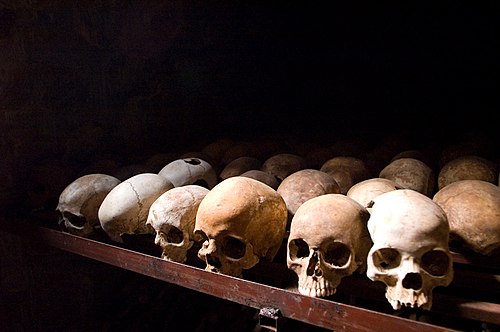
Rwandan genocide
Wikipedia
Maurice Baril
Wikipedia
Secretary-General of the United Nations
Wikipedia
United Nations Department of Peace Operations
Wikipedia
United Nations Assistance Mission for Rwanda
Wikipedia
What Else Happened on December 10
Michael V was the son of Empress Zoe's sister — not her actual child. She adopted him anyway, desperate for an heir after decades of palace intrigue and three h…
King Birger of Sweden lures his brothers, Dukes Valdemar and Erik, into a trap at Nyköping Castle before imprisoning them. The brothers slowly starve to death i…
Four powers, one target: Venice. The richest city in Europe had swallowed too much mainland territory, threatening papal lands and blocking trade routes that ma…
Albuquerque brought 23 ships and 1,500 men against a city of 100,000. The secret weapon wasn't cannons — it was Timoji, a Hindu privateer who knew every creek a…
Martin Luther publicly incinerated the papal bull Exsurge Domine outside Wittenberg’s Elster Gate, finalizing his break from the Roman Catholic Church. This def…
Two men walked to the scaffold, but their crimes weren't equal. Francis Dereham had been Catherine Howard's lover before she ever met Henry VIII — technically l…
Talk to History
Have a conversation with historical figures who witnessed this era. Ask questions, explore perspectives, and bring history to life.