

King Kong Roars: Hollywood's Giant Awakens
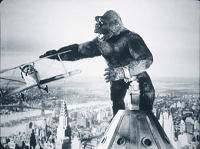
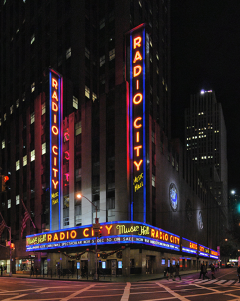
A fifty-foot ape climbed the Empire State Building on screen for the first time on March 2, 1933, and audiences in the depths of the Great Depression lined up around the block to watch. King Kong opened simultaneously at Radio City Music Hall and the RKO Roxy Theatre in New York, earning $89,931 in its first weekend — a record at the time — and proving that spectacle could pull Americans away from their economic misery. The film was the brainchild of Merian C. Cooper, an adventurer and filmmaker who had been obsessed with gorillas since reading explorer Paul Du Chaillu's accounts as a boy. Cooper conceived of a giant ape battling modern civilization, and he found the perfect collaborator in Ernest B. Schoedsack, with whom he had already made the adventure documentaries Grass and Chang. RKO Radio Pictures gave them a budget of roughly $670,000, significant for the era. The technical achievement was Willis O'Brien's stop-motion animation, which brought Kong to life through hundreds of thousands of individually posed frames. O'Brien used an 18-inch articulated model covered in rabbit fur, animated against miniature sets and combined with live-action footage through rear projection and glass paintings. Each second of Kong's movement required 24 individual adjustments of the model. The process was so labor-intensive that the animation sequences took over a year to complete. The film's plot — a film crew captures a giant ape on a remote island and brings it to New York, where it escapes and is killed atop the Empire State Building — drew criticism for its racial subtexts even in 1933. Fay Wray's performance as the screaming captive Ann Darrow became an archetype that would endure for decades. King Kong earned approximately $2 million in its initial run, saved RKO from bankruptcy, and created the template for every monster movie that followed, from Godzilla to Jurassic Park.
March 2, 1933
93 years ago
Key Figures & Places

What Else Happened on March 2
Belisarius commanded just 5,000 men inside Rome when 150,000 Ostrogoths arrived at the walls. The Byzantine general knew he couldn't hold the city through conve…
He ruled for exactly one year and seventeen days. Louis V, crowned King of the Franks at age twenty, had the shortest reign of any Carolingian monarch—cut down …
Louis V ascended the throne of West Francia following his father Lothaire’s death, inheriting a crown stripped of its former authority. His brief, ineffective r…
A sixteen-year-old inherited a waterlogged backwater that nobody wanted. Dirk VI became Count of Holland in 1121, taking control of marshlands so worthless that…
Assassins struck down Charles the Good while he knelt in prayer at the Church of Saint Donatian in Bruges. His sudden death triggered a violent succession crisi…
The Byzantine emperor didn't even try to save it. Nicaea — where the Christian Church had defined the nature of Christ itself a thousand years earlier — fell to…
Talk to History
Have a conversation with historical figures who witnessed this era. Ask questions, explore perspectives, and bring history to life.