Hubble Sees Andromeda: Universe Expands Beyond the Milky Way
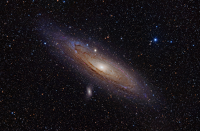
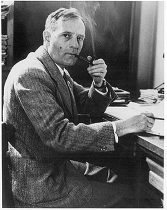
A single photograph changed humanity's understanding of the universe. Edwin Hubble, working at the Mount Wilson Observatory above Los Angeles, announced on November 23, 1924, that what astronomers had called the Andromeda Nebula was actually an entirely separate galaxy, lying roughly 900,000 light-years beyond the Milky Way. In one stroke, the known universe expanded from a single galaxy to a cosmos of staggering, perhaps infinite, scale. The prevailing scientific consensus held that the Milky Way was the entire universe. The fuzzy patches visible through telescopes, called nebulae, were assumed to be gas clouds within our galaxy. A 1920 debate between astronomers Harlow Shapley and Heber Curtis, known as the Great Debate, had failed to resolve the question. Shapley argued the nebulae were local. Curtis believed at least some were separate "island universes" at enormous distances. Neither had conclusive proof. Hubble found it. Using Mount Wilson's 100-inch Hooker Telescope, then the world's most powerful, he identified Cepheid variable stars within Andromeda. These stars pulsate at a rate directly related to their true brightness, allowing astronomers to calculate distance by comparing actual brightness to apparent brightness. Hubble's measurements placed Andromeda far beyond the boundaries of the Milky Way. His original estimate of 900,000 light-years was later revised to approximately 2.5 million, but the fundamental conclusion was unassailable. The discovery demolished the small-universe model overnight. Hubble went on to show that distant galaxies are receding from us at speeds proportional to their distance, establishing the expansion of the universe and laying the observational foundation for the Big Bang theory. A shy, meticulous man who had once practiced law before turning to astronomy, Hubble reshaped cosmology more profoundly than anyone since Copernicus.
November 23, 1924
102 years ago
Key Figures & Places
What Else Happened on November 23
Thespis of Icaria stepped out of the chorus to deliver solo lines, becoming the first recorded individual actor in Western theater. His innovation of dialogue b…
The most powerful ruler in Western Europe rode into Rome not as a pilgrim but as a judge. Charlemagne, King of the Franks, arrived in the Eternal City in late N…
Saladin entered Damascus and absorbed the city into his growing domain without a fight. Control of this strategic prize gave him the power base to unify Muslim …
Assassins ambushed and killed Prince Leszek I the White during a gathering of Piast dukes at Gąsawa. His death shattered the fragile unity of the Polish princip…
King Ferdinand III of Castile captured Seville after a 16-month siege, taking the largest and wealthiest city remaining under Moorish control in Iberia. The con…
Perkin Warbeck, who had claimed to be the lost prince Richard of York and invaded England twice with foreign backing, was hanged after allegedly attempting to e…
Talk to History
Have a conversation with historical figures who witnessed this era. Ask questions, explore perspectives, and bring history to life.