Hoxne Hoard Unearthed: Roman Wealth Revealed
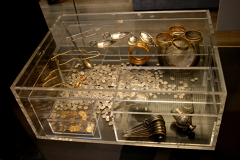
A farmer in Suffolk asked his neighbor Eric Lawes to help find a lost hammer with a metal detector, and Lawes discovered instead the largest cache of late Roman gold and silver ever found in Britain. The Hoxne Hoard, buried in an oak chest sometime after 407 AD, contained 15,234 coins, 200 silver spoons and ladles, and dozens of gold jewelry pieces, all in remarkable condition. The find rewritten understanding of Roman Britain's final years and the wealth that existed in the province as imperial authority collapsed. Lawes, an experienced detectorist, realized within minutes that he had found something extraordinary and stopped digging. He reported the discovery to the Suffolk Archaeological Unit, who conducted a proper excavation the next day. This decision preserved crucial information about how the objects had been arranged in the ground, something that treasure hunters who dig without reporting often destroy. The hoard's coins provide a precise dating bracket. The latest coins were minted during the reign of Emperor Constantine III, who withdrew the last Roman legions from Britain in 407 AD. The absence of any later coins suggests the hoard was buried around that time, during the chaotic transition as Roman administration disintegrated and Britain fragmented into independent territories. The treasure reveals a household of substantial wealth. The gold body chain, weighing over 250 grams, is one of the finest pieces of late Roman jewelry ever found. The silver pepper pots, shaped like figures including an empress, indicate access to exotic spice trade networks. Many of the spoons are inscribed with Christian symbols or personal names, suggesting they were baptismal gifts, evidence of established Christianity in late Roman East Anglia.
November 16, 1992
34 years ago
Key Figures & Places
What Else Happened on November 16
Emperor Justinian published the second and final revision of his legal code, the Codex Justinianus, consolidating 1,000 years of Roman law into a single systema…
Emperor Li Jing of Southern Tang dispatched an army of 10,000 under General Bian Hao to conquer the Chu Kingdom in 951, quickly overrunning its defenses and dep…
He was 1,500 miles away when he became king. Edward I learned of Henry III's death while still in Sicily, returning from the Holy Land — and simply didn't rush …
Jadwiga was crowned King (not Queen) of Poland at age 10, with the masculine title chosen to assert her full sovereign authority. She married Lithuanian Grand D…
The victims never existed. That's the core of it. The "Holy Child of La Guardia" — supposedly a murdered Christian boy whose heart was used in Jewish ritual — w…
Francisco Pizarro and 168 Spanish soldiers ambushed Inca Emperor Atahualpa in the main square of Cajamarca, killing thousands of unarmed attendants and capturin…
Talk to History
Have a conversation with historical figures who witnessed this era. Ask questions, explore perspectives, and bring history to life.