

Peace Corps Launches: Kennedy's Global Volunteer Force
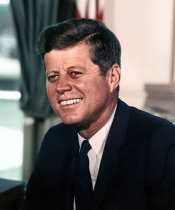
Thousands of American college graduates would soon find themselves digging wells in Ghana, teaching math in the Philippines, and building roads in Colombia — all because of a 2 a.m. challenge on the steps of the University of Michigan. During a campaign stop in October 1960, John F. Kennedy spontaneously asked students if they would volunteer to serve their country abroad. The response was overwhelming, and within months of taking office, he made it official. Kennedy signed Executive Order 10924 on March 1, 1961, establishing the Peace Corps as a new agency within the State Department. The idea drew from several sources: Senator Hubert Humphrey had proposed a similar program in 1957, and Representative Henry Reuss had pushed for a feasibility study. But Kennedy gave it presidential urgency, naming his brother-in-law Sargent Shriver to lead the effort. Shriver moved at extraordinary speed. By August 1961, the first group of 51 volunteers arrived in Accra, Ghana, to teach in secondary schools. Congress formally authorized the agency on September 22, 1961, with the Peace Corps Act. Within two years, 7,300 volunteers were serving in 44 countries. Applicants needed a college degree and had to commit to two years of service, preceded by three months of intensive language and cultural training. The program served dual purposes that Kennedy never tried to hide: genuine development assistance and a Cold War counterweight to Soviet influence in newly independent nations. Critics on the left called it imperialism with a friendly face; critics on the right called it naive. Volunteers on the ground mostly found it was neither — just difficult, underfunded, and occasionally transformative. More than 240,000 Americans have served in 142 countries since 1961, making the Peace Corps one of the longest-running volunteer programs in the world.
March 1, 1961
65 years ago
Key Figures & Places
What Else Happened on March 1
The first military parade in Roman history was thrown by a man who'd just won a war caused by kidnapping his neighbors' daughters. Romulus needed wives for his …
Publicola earned his nickname—"friend of the people"—by tearing down his own house. After defeating Rome's last king at Silva Arsia, the consul faced a differen…
Sulla's soldiers were so starving they'd resorted to boiling leather belts and shoes, but the Athenians had it worse — they were eating grass from the city wall…
King Denis of Portugal officially chartered the University of Coimbra, anchoring the institution in the royal capital before its eventual permanent move to the …
Diocletian elevated his colleague Maximian to the rank of Caesar, splitting the Roman Empire into a formal diarchy. By sharing administrative and military burde…
Four men to rule an empire that one couldn't hold. Diocletian knew Rome was crumbling under its own weight—barbarian invasions on every frontier, twenty-six emp…
Talk to History
Have a conversation with historical figures who witnessed this era. Ask questions, explore perspectives, and bring history to life.