Klaus Fuchs Convicted: Atomic Secrets to Soviets
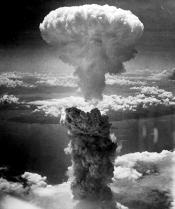
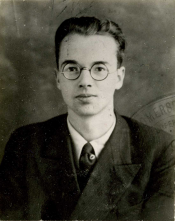
The atomic secrets of the Manhattan Project reached Moscow years before the Soviet Union detonated its first nuclear weapon, and the man who delivered them was a quiet, bespectacled German physicist whom everyone at Los Alamos trusted completely. Klaus Fuchs confessed to British intelligence on January 24, 1950, and his conviction on March 1 exposed the deepest penetration of the Western nuclear program by Soviet espionage. Fuchs fled Nazi Germany in 1933 as a committed communist and settled in Britain, where he earned a doctorate in physics from the University of Bristol. When the British atomic weapons project, codenamed Tube Alloys, began during World War II, Fuchs was recruited for his expertise in theoretical physics. He was transferred to Los Alamos in 1944 as part of the British delegation to the Manhattan Project, where he worked on the implosion design for the plutonium bomb. Throughout his time at Los Alamos, Fuchs passed detailed technical information to his Soviet handler, Harry Gold. The material included the design specifications for the Fat Man bomb dropped on Nagasaki, calculations on early hydrogen bomb concepts, and production data on fissile materials. Soviet scientists later acknowledged that Fuchs's intelligence saved their weapons program at least two years of development time. British code-breakers working on the Venona project, which decrypted Soviet diplomatic communications, identified Fuchs as a spy in 1949. Confronted by MI5 interrogator William Skardon, Fuchs confessed after several meetings. He was tried at the Old Bailey on March 1, 1950, and sentenced to 14 years in prison, the maximum for espionage against an allied power rather than an enemy. Fuchs's betrayal accelerated the nuclear arms race and shattered Anglo-American intelligence cooperation for nearly a decade.
March 1, 1950
76 years ago
Key Figures & Places

What Else Happened on March 1
The first military parade in Roman history was thrown by a man who'd just won a war caused by kidnapping his neighbors' daughters. Romulus needed wives for his …
Publicola earned his nickname—"friend of the people"—by tearing down his own house. After defeating Rome's last king at Silva Arsia, the consul faced a differen…
Sulla's soldiers were so starving they'd resorted to boiling leather belts and shoes, but the Athenians had it worse — they were eating grass from the city wall…
King Denis of Portugal officially chartered the University of Coimbra, anchoring the institution in the royal capital before its eventual permanent move to the …
Diocletian elevated his colleague Maximian to the rank of Caesar, splitting the Roman Empire into a formal diarchy. By sharing administrative and military burde…
Four men to rule an empire that one couldn't hold. Diocletian knew Rome was crumbling under its own weight—barbarian invasions on every frontier, twenty-six emp…
Talk to History
Have a conversation with historical figures who witnessed this era. Ask questions, explore perspectives, and bring history to life.