Tesla Lights Up St. Louis: The Birth of Radio
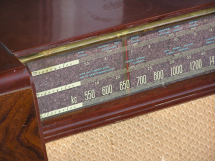
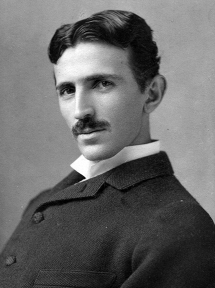
A packed lecture hall in St. Louis watched Nikola Tesla do something no human had done before: transmit information through thin air. Using equipment he had designed and built himself, Tesla sent electromagnetic signals across the room without wires, demonstrating the fundamental principles that would become radio technology. The audience saw sparks leap between resonating coils as Tesla explained his theory of wireless transmission. Tesla had been developing his ideas about resonant circuits and electromagnetic radiation since at least 1891, when he began experimenting with high-frequency alternating currents at his laboratory in New York. His work built on Heinrich Hertz's 1887 confirmation of electromagnetic waves, but Tesla went further, envisioning practical applications for wireless communication rather than merely proving a physics principle. The March 1893 demonstration at the Franklin Institute in St. Louis included a transmitter and receiver separated by a significant distance. Tesla showed that tuned circuits could send and receive signals at specific frequencies, a concept he would patent in 1897. He repeated the demonstration before the National Electric Light Association in Philadelphia shortly afterward, establishing the core architecture of radio: a transmitter generating oscillating electromagnetic waves and a receiver tuned to detect them. Guglielmo Marconi would later commercialize wireless telegraphy using principles Tesla had publicly demonstrated, sparking a patent dispute that the US Supreme Court ultimately resolved in Tesla's favor in 1943. The St. Louis demonstration remains the earliest documented public showing of radio-frequency transmission for communication purposes, predating Marconi's work by several years. Tesla's 1893 lecture laid the technical groundwork for an industry that would reshape warfare, entertainment, and daily life within three decades.
March 1, 1893
133 years ago
Key Figures & Places
What Else Happened on March 1
The first military parade in Roman history was thrown by a man who'd just won a war caused by kidnapping his neighbors' daughters. Romulus needed wives for his …
Publicola earned his nickname—"friend of the people"—by tearing down his own house. After defeating Rome's last king at Silva Arsia, the consul faced a differen…
Sulla's soldiers were so starving they'd resorted to boiling leather belts and shoes, but the Athenians had it worse — they were eating grass from the city wall…
King Denis of Portugal officially chartered the University of Coimbra, anchoring the institution in the royal capital before its eventual permanent move to the …
Diocletian elevated his colleague Maximian to the rank of Caesar, splitting the Roman Empire into a formal diarchy. By sharing administrative and military burde…
Four men to rule an empire that one couldn't hold. Diocletian knew Rome was crumbling under its own weight—barbarian invasions on every frontier, twenty-six emp…
Talk to History
Have a conversation with historical figures who witnessed this era. Ask questions, explore perspectives, and bring history to life.