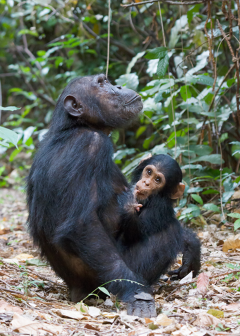
Jane Goodall Breaks Rules: Chimps Use Tools
A 26-year-old Englishwoman with no university degree sat in a Tanzanian forest on November 4, 1960, and watched a chimpanzee strip leaves from a twig, insert it into a termite mound, and extract insects to eat. Jane Goodall had just witnessed something the scientific establishment considered impossible: a non-human animal deliberately manufacturing a tool. When she telegrammed her mentor Louis Leakey, he famously replied, "Now we must redefine tool, redefine man, or accept chimpanzees as humans." Goodall had arrived at the Gombe Stream Reserve on the shores of Lake Tanganyika four months earlier, sent by Leakey, the renowned paleoanthropologist who believed long-term observation of great apes could illuminate early human behavior. The establishment was skeptical of her qualifications. She had worked as a secretary and waitress, and she committed what primatologists considered cardinal sins: naming her subjects rather than numbering them and describing their emotional states in human terms. The chimpanzee she observed was one she named David Greybeard, a male who became her primary subject and the first chimp to lose his fear of her presence. Over subsequent weeks, she observed David and others not merely using found objects as tools but modifying materials to create them, selecting specific stems and adjusting their length and flexibility for the task. The discovery forced a reassessment of what separated humans from other animals. Tool use had been considered the defining characteristic of the genus Homo since Benjamin Franklin described humans as "tool-making animals." Goodall's observation obliterated that boundary and opened a field of research into animal cognition that continues to expand. Her subsequent 60-year study at Gombe remains the longest continuous field study of any animal species, documenting warfare between chimpanzee groups and complex social hierarchies that blurred the line between human and animal with every passing decade.
November 4, 1960
66 years ago
Key Figures & Places

What Else Happened on November 4
Riots erupt in Constantinople as citizens, enraged by Emperor Anastasius' removal of Chalcedonian patriarchs and liturgical shifts, attempt to crown Areobindus …
The water rose so fast that horses drowned inside their stables. Giovanni Villani watched Florence drown in 1333, scribbling furiously as the Arno swallowed bri…
Paganino Doria's Genoese fleet annihilated the Venetian navy under Niccolò Pisani at the Battle of Sapienza on November 4, 1354, capturing virtually every Venet…
Joan of Arc led a successful assault on Saint-Pierre-le-Moutier despite being initially repulsed and nearly abandoned by her own troops. According to her compan…
Christopher Columbus reached the Leeward Islands on his second voyage, bringing 17 ships and 1,200 colonists to establish permanent European settlements in the …
She'd traveled for months, survived seasickness, and didn't even speak English. Catherine of Aragon finally met Arthur Tudor in November 1501 — a 15-year-old Sp…
Talk to History
Have a conversation with historical figures who witnessed this era. Ask questions, explore perspectives, and bring history to life.