First Residents Arrive: International Space Station Opens
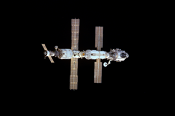
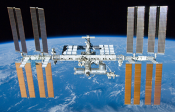
An American astronaut and two Russian cosmonauts floated through the hatch of the International Space Station on November 2, 2000, and humanity has maintained a continuous presence in orbit ever since. Expedition 1 commander William Shepherd and flight engineers Sergei Krikalev and Yuri Gidzenko arrived aboard a Soyuz TM-31 spacecraft after launching from Baikonur Cosmodrome two days earlier. Their four-month stay inaugurated the longest unbroken stretch of human habitation off Earth. The station they entered was still a skeletal framework. Only three modules were operational: the Russian-built Zarya control module, the Unity connecting node from NASA, and the recently attached Zvezda service module that provided living quarters and life support. The crew spent much of their time activating systems, fixing equipment, and preparing for construction missions that would follow. The partnership that built the station was itself extraordinary. The ISS brought together the space agencies of the United States, Russia, Japan, Canada, and eleven European nations in what remains the most expensive object ever constructed, with total costs exceeding $150 billion. NASA absorbed Russian engineers into the program partly to prevent their expertise from being sold to nations developing ballistic missiles. Shepherd, a former Navy SEAL, lobbied NASA to give the station the call sign "Alpha," arguing that crew members needed a name for radio communications. The choice generated mild controversy, as Russian officials felt it diminished their station Mir, which had been continuously occupied for nearly a decade before its deorbiting in 2001. More than two decades after Expedition 1, the ISS has hosted over 270 people from 21 countries, supported thousands of experiments, and proved that international cooperation can function even when the nations involved are in conflict on the ground.
November 2, 2000
26 years ago
Key Figures & Places
What Else Happened on November 2
A foreign ruler was murdered inside a Chinese imperial palace — and the emperor signed off on it. Tong Yabghu Qaghan, powerful leader of the Western Turkic Khag…
The Armagnac and Burgundian factions signed the Peace of Bicetre, temporarily halting the civil war that had consumed France while England circled. The truce ba…
The water didn't recede. It swallowed entire villages whole. The All Saints' Flood of 1570 — named for the feast day it struck — sent walls of North Sea water c…
Hundreds of Narragansett people, mostly women, children, and elderly, were sheltering inside the Great Swamp Fort when colonial forces arrived on December 19, 1…
Four British warships shattered against the rocks of the Isles of Scilly after navigators miscalculated their position by miles. This disaster forced Parliament…
Two men in a Boston tavern essentially invented American political infrastructure. Samuel Adams pushed hard for it — not a battle plan, not a declaration, just …
Talk to History
Have a conversation with historical figures who witnessed this era. Ask questions, explore perspectives, and bring history to life.