Bolsheviks Seize Power: Russia's Revolution Erupts
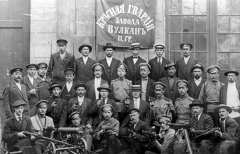
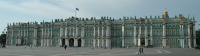
Armed workers and soldiers loyal to the Bolshevik Party seized government buildings across Petrograd on the night of October 25, 1917 (November 7 by the Western calendar), and stormed the Winter Palace, overthrowing the Provisional Government of Alexander Kerensky in a revolution that would reshape the twentieth century. By dawn, Vladimir Lenin controlled Russia's capital and declared power transferred to the soviets, the workers' councils that had sprung up across the country since the February Revolution eight months earlier. The February Revolution had toppled Tsar Nicholas II, but the Provisional Government that replaced him proved incapable of addressing Russia's two most urgent crises: the catastrophic war with Germany and the peasants' demand for land redistribution. The government continued fighting a war that had already killed more than two million Russian soldiers, alienating the army and the urban working class simultaneously. Lenin, who had returned from exile in Switzerland in April, hammered a single message: "Peace, Land, Bread." By October, the Bolsheviks held majorities in the Petrograd and Moscow soviets. The actual seizure of power was remarkably bloodless. Bolshevik Red Guards, organized under the Military Revolutionary Committee of the Petrograd Soviet and directed by Leon Trotsky, occupied telegraph offices, railway stations, and bridges with minimal resistance. The cruiser Aurora fired a blank shot across the Neva River as a signal, and Red Guards entered the Winter Palace through unlocked doors. The ministers of the Provisional Government were arrested; Kerensky had already fled in a borrowed car. Lenin moved swiftly to consolidate power. Within hours, the Second All-Russian Congress of Soviets ratified the transfer of authority and issued decrees on peace and land. Russia withdrew from World War I through the Treaty of Brest-Litovsk in March 1918, surrendering vast territories. But the revolution also triggered a civil war that lasted until 1922, killed millions, and established the one-party state that would endure as the Soviet Union until 1991. The October Revolution remained the foundational myth of Soviet identity and the most consequential political upheaval of the modern era.
October 25, 1917
109 years ago
Key Figures & Places
What Else Happened on October 25
Crispin and Crispinian were Roman brothers who preached Christianity while working as shoemakers, giving shoes to the poor. Emperor Diocletian ordered them drow…
Emperor Leo I elevated his seven-year-old grandson, Leo II, to the rank of Caesar, securing the succession of the Thracian dynasty. This calculated move bypasse…
The siege lasted four months. English and Flemish Crusaders, sailing to the Holy Land, stopped to help King Afonso take Lisbon from the Moors. They built siege …
Seljuk horse archers decimated Conrad III’s German crusaders near Dorylaeum, ending the Second Crusade’s momentum before it reached the Holy Land. This crushing…
Crusader knights conquered Lisbon after a four-month siege, helping King Afonso I of Portugal push back Muslim rule. The crusaders were actually headed for the …
Henry Plantagenet was 21 when he became king without ever setting foot in England for his coronation. He'd been fighting his claim across Normandy and Anjou sin…
Talk to History
Have a conversation with historical figures who witnessed this era. Ask questions, explore perspectives, and bring history to life.