

First Electrical Telegraph Demonstrated: The Wire That Shrinks the World
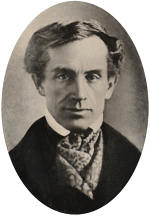
The message traveled 2 miles of wire at Speedwell Iron Works in Morristown, New Jersey. It was January 6, 1838. Samuel Morse had been working on the idea for six years — since he'd learned on a sea voyage home from Europe that his wife had died, and the news had taken weeks to reach him. The telegraph was the answer to that grief. His partner Alfred Vail had refined the code: short signals and long signals, dots and dashes, enough combinations to represent every letter. The first public demonstration worked. But Congress took five more years to fund a telegraph line. Morse kept lobbying. In 1844, he sent a four-word message from Washington to Baltimore: "What hath God wrought." Within a decade, 20,000 miles of wire crisscrossed the United States. Ships could coordinate before they docked. Battles could be reported the same day. The world got smaller — the first time, but not the last.
January 6, 1838
188 years ago
Key Figures & Places

What Else Happened on January 6
Mit einer Ansprache an die Prätorianer eröffnet Kaiser Mark Aurel den römischen Feldzug im Ersten Markomannenkrieg.
au palais de Ponthion, entrevue entre le roi franc Pépin le Bref et le pape Étienne II.
Pope Stephen II crossed the Alps in winter — the first pope to do so — to meet Pepin III at Saint-Denis on January 6, 754. He re-anointed Pepin as King of the F…
Eine polnische Delegation kündigt in Allstedt dem ostfränkisch-deutschen König Heinrich II. das Kommen des polnischen Kronprinzen Mieszko II. Lambert an, der ei…
Knud Ier le Grand est proclamé roi d'Angleterre.
Edward the Confessor died on January 5, 1066. The Witan met the next day and chose Harold Godwinson as king. Harold was crowned in Westminster Abbey on January …
Talk to History
Have a conversation with historical figures who witnessed this era. Ask questions, explore perspectives, and bring history to life.