York Captures 132 Germans: Argonne's Greatest Hero
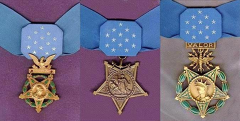
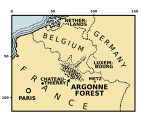
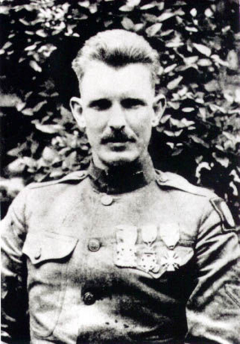
Corporal Alvin York, a conscientious objector from the mountains of Tennessee who had nearly refused to serve, killed 28 German soldiers and captured 132 more during a single engagement in the Argonne Forest on October 8, 1918. The action earned him the Medal of Honor and made him the most celebrated American soldier of World War I — a pacifist backwoodsman who became a reluctant war hero. York grew up in a two-room log cabin in Pall Mall, Tennessee, the third of eleven children in a family that hunted for food and farmed a small plot of rocky land. He was a skilled marksman from childhood but had also been a hard-drinking brawler until a religious conversion in 1914 led him to the Church of Christ in Christian Union, which opposed all warfare. When drafted in 1917, York filed for conscientious objector status, citing the commandment "Thou shalt not kill." His claim was denied. His battalion commander and company captain spent months in theological discussion with York, eventually convincing him that scripture also supported the defense of the innocent. The morning of October 8 found York's unit, the 328th Infantry Regiment of the 82nd Division, attacking fortified German positions along the Decauville rail line in the Argonne Forest. Machine gun fire from a ridge above cut through the advancing Americans, killing and wounding most of the patrol's NCOs. York, one of the few survivors with a clear line of fire, began methodically picking off German machine gunners at ranges of several hundred yards using his Enfield rifle. When a group of six German soldiers charged him with bayonets, York switched to his .45 caliber pistol and dropped all six — shooting the last man first so the others wouldn't know their numbers were shrinking, a technique he said he learned turkey hunting back in Tennessee. A German major, watching his men fall, offered to surrender the entire unit. York marched 132 prisoners back to American lines, gathering additional captives along the way. Marshal Ferdinand Foch, the Allied supreme commander, called it "the greatest thing accomplished by any private soldier of all the armies of Europe." York returned home, declined lucrative commercial offers, and used his fame to build a school for mountain children in his home county.
October 8, 1918
108 years ago
Key Figures & Places
What Else Happened on October 8
Constantine defeated his co-emperor Licinius at Cibalae in 314, killing 20,000 of his soldiers and seizing his European territories in a single afternoon. They'…
Constantine I crushed the forces of Licinius at the Battle of Cibalae, forcing his rival to cede the Balkan provinces. This victory split the Roman Empire into …
The Council of Chalcedon opened in 451 with 520 bishops debating whether Christ had one nature or two. Emperor Marcian called the council to resolve the questio…
The Council of Chalcedon opened in 451 with 520 bishops packed into the church of Saint Euphemia, arguing over whether Christ had one nature or two. Emperor Mar…
Louis the Younger crushed the forces of his uncle, Charles the Bald, at the Battle of Andernach, halting West Frankish expansion into the Rhineland. This decisi…
Dmitar Zvonimir was crowned King of Croatia in 1075 with a crown sent by Pope Gregory VII, making Croatia a formal ally of Rome against Byzantium. The ceremony …
Talk to History
Have a conversation with historical figures who witnessed this era. Ask questions, explore perspectives, and bring history to life.