

Sadat Assassinated: Egyptian President Gunned Down at a Military Parade
Islamic extremists assassinate Egyptian President Anwar al-Sadat during a military parade in Cairo, ending his historic peace initiative with Israel. The killing immediately halts the momentum of the Camp David Accords and triggers a decade of intensified regional instability that reshapes Middle Eastern alliances.
October 6, 1981
45 years ago
Key Figures & Places

Egypt
Wikipedia
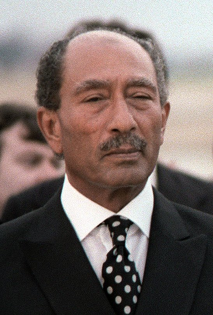
Anwar al-Sadat
Wikipedia
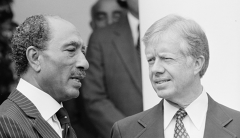
murdered
Wikipedia

Anwar Sadat
Wikipedia

Assassination of Anwar Sadat
Wikipedia

President of Egypt
Wikipedia

Nobel Peace Prize
Wikipedia

Auguste Beernaert
Wikipedia

Prime Minister of Belgium
Wikipedia

Cairo
Wikipedia

Narges Mohammadi
Wikipedia

Condition des femmes en Iran
Wikipedia

Campagne internationale pour l'abolition des armes nucléaires
Wikipedia

non-governmental organization
Wikipedia

Geneva
Wikipedia

Switzerland
Wikipedia

1918
Wikipedia
1829
Wikipedia

Egypt
Wikipedia

Yom Kippur War
Wikipedia
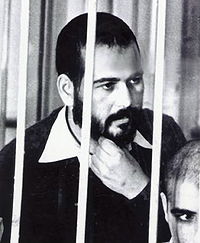
Khalid Al-Islambuli
Wikipedia
Capital punishment
Wikipedia

Egyptian Armed Forces
Wikipedia

Suez Canal
Wikipedia

Syrian Armed Forces
Wikipedia

خطة آلون
Wikipedia

Golan Heights
Wikipedia

Israel
Wikipedia

ريم البارودي
Wikipedia

محمود سامي البارودي
Wikipedia

محمود إبراهيم سلامة
Wikipedia

1978
Wikipedia

Belgium
Wikipedia
1909
Wikipedia

Syria
Wikipedia

عيد القوات المسلحة (مصر)
Wikipedia
What Else Happened on October 6
Die Einnahme Babylons durch das Heer des achämenidischen Königs Kyros II. und die Gefangennahme Königs Nabonid beenden sowohl das Neubabylonische Reich als auch…

The Cimbri annihilated two Roman armies at Arausio, killing 80,000 soldiers and 40,000 camp followers. It was Rome's worst defeat since Cannae. The disaster hap…
Two Roman armies suffered a catastrophic annihilation at the hands of the Cimbri and Teutones near the Rhône River, losing an estimated 80,000 soldiers. This di…
Roman legions under Lucullus shattered the Armenian army at the Battle of Tigranocerta, dismantling the regional hegemony of King Tigranes the Great. This victo…
Tigranes the Great watched his army collapse from a hilltop. He'd brought 250,000 men to fight Lucullus and his 18,000 Romans outside Tigranocerta. The Romans c…
October 6 was an unlucky day in Roman superstition—the anniversary of the Battle of Arausio. Lucullus attacked Tigranes anyway and routed an Armenian army five …
Talk to History
Have a conversation with historical figures who witnessed this era. Ask questions, explore perspectives, and bring history to life.