

Bush Declares Kuwait Liberated: Gulf War Ground Campaign Wins in 100 Hours
President George H. W. Bush declares Kuwait liberated, ending Iraq's seven-month occupation and restoring the emirate's sovereignty. This announcement triggers a massive redeployment of American forces back to the United States while solidifying a new security architecture in the Persian Gulf that shapes regional alliances for decades.
February 27, 1991
35 years ago
Key Figures & Places
President of the United States
Wikipedia
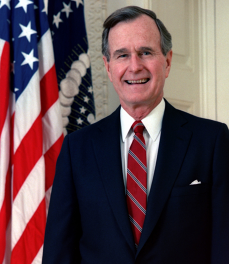
George H. W. Bush
Wikipedia
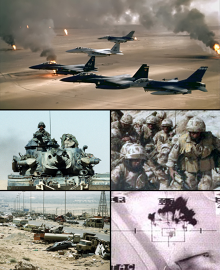
Gulf War
Wikipedia

Kuwait
Wikipedia

Gulf War
Wikipedia

George H. W. Bush
Wikipedia

Kuwait
Wikipedia

Iraq
Wikipedia

United Nations Security Council
Wikipedia

Liste des résolutions du Conseil de sécurité des Nations unies
Wikipedia

Opération des Nations unies en Côte d'Ivoire
Wikipedia
Résolution 19 du Conseil de sécurité des Nations unies
Wikipedia

Détroit de Corfou
Wikipedia
Ali Mohamed al-Zinkawi
Wikipedia

Lancer du marteau
Wikipedia

فاطمة الربيعي
Wikipedia
What Else Happened on February 27
en China, Confucio registra el primero de una lista de 36 eclipses solares.
Emperor Theodosius I made Christianity the only legal religion of the Roman Empire on February 27, 380. Not just legal — mandatory. The Edict of Thessalonica de…

Theodosius II built the University of Constantinople in 425 because his wife told him to. Aelia Eudocia, a poet and intellectual herself, wanted a state-funded …
Nach der Rabenschlacht vor Ravenna vereinbaren Odoaker und der Ostgotenherrscher Theoderich unter Vermittlung des Erzbischofs Johannes von Ravenna einen Frieden…
Abaoji unified the disparate Khitan tribes and assumed the title of khagan, consolidating power over the vast steppes of Inner Mongolia. This centralization tra…
A nomadic warlord who couldn't read Chinese became emperor of a dynasty that would last two centuries. Abaoji unified the Khitan tribes through a mix of marriag…
Talk to History
Have a conversation with historical figures who witnessed this era. Ask questions, explore perspectives, and bring history to life.