

Damascus Falls: Arab Conquest Reshapes Middle East
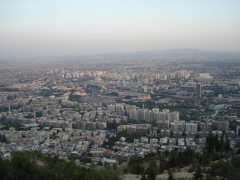
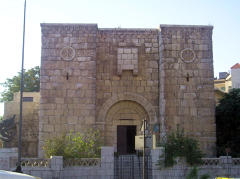
The ancient city of Damascus, one of the oldest continuously inhabited cities in the world, fell to the armies of the Rashidun Caliphate on September 19, 634, after a six-month siege that broke the Byzantine Empire’s grip on Syria and opened the Levant to Arab conquest. The fall of Damascus was the first major urban capture in the great wave of Islamic expansion that reshaped the map of the Near East and North Africa within a single generation. The Arab forces were commanded by Khalid ibn al-Walid, a former opponent of the Prophet Muhammad who converted to Islam and became the most brilliant tactician of the early conquests. Known as the Sword of God, Khalid had already defeated a Byzantine force at the Battle of Ajnadayn in July 634 before marching his army north to Damascus. The city was defended by a garrison under Thomas, the son-in-law of the Byzantine Emperor Heraclius, who sealed the gates and awaited relief from the main imperial army. Khalid divided his forces to blockade all six gates of the city simultaneously, a bold disposition that stretched his army thin but prevented the garrison from concentrating its defenses. The siege dragged through the summer as the defenders hoped for the Byzantine relief force that Heraclius was assembling in the north. Food grew scarce inside the walls, and morale deteriorated as it became clear that rescue was not coming quickly enough. The city fell through a combination of assault and negotiation. Khalid stormed the eastern Bab Sharqi gate at the same time that Abu Ubayda ibn al-Jarrah, the overall commander of the Muslim forces in Syria, accepted a peaceful surrender at the western Bab al-Jabiya gate. The result was a dual arrangement: one half of the city was taken by force and one half by treaty, a distinction that affected the terms applied to the Christian and Jewish inhabitants. Damascus became the capital of the Umayyad Caliphate in 661 and remained one of the most important cities in the Islamic world for centuries. The Great Mosque of Damascus, built by the Umayyads on the site of a Roman temple and Christian cathedral, still stands as a monument to the civilization that emerged from the conquests Khalid’s sword made possible.
September 19, 634
1392 years ago
Key Figures & Places




What Else Happened on September 19
The Roman Senate declared Nerva emperor immediately following Domitian’s assassination, ending the Flavian dynasty’s autocratic grip on power. By ordering the d…
Constantine I elevated his nephew Flavius Dalmatius to the rank of Caesar, granting him administrative control over Thrace, Macedonia, and Achaea. This promotio…
Edward the Black Prince had around 8,000 men and was trying to retreat when the French king John II decided to charge instead of wait. The English longbowmen sh…
The Teutonic Order's State successfully repels the combined Polish-Lithuanian assault, ending the siege and preserving their control over Marienburg for another…
Nathaniel Bacon’s rebels torched Jamestown, compelling Governor William Berkeley to flee across the Chesapeake Bay. This destruction ended the colony’s first ca…
Giles Corey endured two days of heavy stones placed upon his chest, refusing to enter a plea to the witchcraft charges leveled against him. By dying without a c…
Talk to History
Have a conversation with historical figures who witnessed this era. Ask questions, explore perspectives, and bring history to life.