Saddam Withdraws: Gulf War Ends in Kuwait
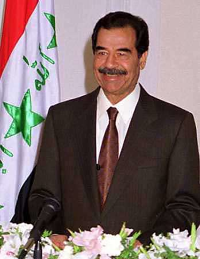
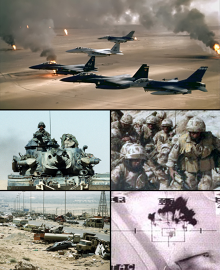
Saddam Hussein announced on Baghdad Radio that Iraqi forces would withdraw from Kuwait, seven months after his army had invaded and six weeks after coalition bombs began falling on Baghdad. The announcement on February 26, 1991, came not from a position of strategic retreat but from military collapse — coalition forces had breached Iraqi defensive lines along a four-hundred-mile front, and the Iraqi army was disintegrating. The air campaign had been devastating. Beginning on January 17, coalition aircraft flew over 100,000 sorties, destroying Iraq's air defense network, command infrastructure, and supply lines. Iraqi troops in Kuwait, many of them poorly trained conscripts, endured weeks of relentless bombardment with dwindling food, water, and ammunition. Entire divisions simply ceased to function as fighting units. When the ground offensive launched on February 24, American, British, French, and Arab forces advanced so rapidly that the greatest risk was outrunning their own supply lines. The withdrawal quickly became a rout. Thousands of Iraqi soldiers and vehicles clogged Highway 80, the main road from Kuwait City to Basra, creating a miles-long traffic jam of military vehicles, stolen cars, and looted goods. Coalition aircraft attacked the column repeatedly, producing a scene of destruction so horrifying it became known as the "Highway of Death." Images of the charred convoy shocked the world and contributed to President Bush's decision to halt offensive operations. Bush declared a ceasefire on February 28, exactly one hundred hours after the ground war began. Kuwait was liberated, but the decision to stop short of Baghdad and leave Saddam in power would be debated for the next twelve years. Saddam crushed Shia and Kurdish uprisings that erupted in the war's aftermath, killing tens of thousands while American forces watched from nearby positions. The unfinished business of 1991 hung over American foreign policy until the 2003 invasion completed what the Gulf War had left undone.
February 26, 1991
35 years ago
Key Figures & Places
What Else Happened on February 26
Astronomers began tracking the reign of the Babylonian king Nabonassar, establishing a precise chronological anchor that lasted for centuries. By standardizing …
Ptolemy needed a zero point for his astronomical tables. He chose February 26, 747 BC — the first day of King Nabonassar's reign in Babylon. Not because Nabonas…
Chandragupta I took a title nobody had used in centuries: *samrat*, supreme emperor. Not king. Emperor. He married a Licchavi princess named Kumaradevi and put …
Valentinian I became emperor because nobody else wanted the job. The previous emperor had died suddenly in Bithynia. The army gathered to pick a successor. They…
Solomon had the throne. Géza had the people. By 1074, Hungary was split between the legitimate king and his cousin who controlled two-thirds of the country. The…
The siege of Kaifeng killed more people than the atomic bombs dropped on Japan. Conservative estimates: 600,000 dead, mostly from starvation and disease. The Mo…
Talk to History
Have a conversation with historical figures who witnessed this era. Ask questions, explore perspectives, and bring history to life.