Churchill Unveils Britain's Bomb: Cold War Escalates
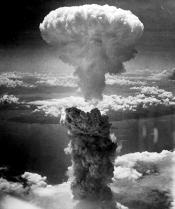
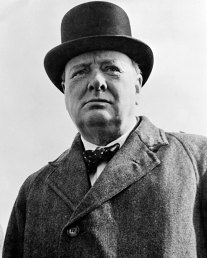
Winston Churchill rose in the House of Commons on February 26, 1952, and confirmed what many had suspected: Britain possessed an atomic bomb. The announcement made the United Kingdom the third nuclear power after the United States and the Soviet Union, completing a journey from wartime partnership to independent deterrent that Churchill himself had set in motion a decade earlier. Britain's nuclear program had roots in the Manhattan Project. British scientists, including several refugees from Nazi-occupied Europe, made critical early contributions to atomic weapons research. The 1943 Quebec Agreement gave Britain a partnership role in the American program. But after the war, the United States passed the McMahon Act of 1946, which cut off nuclear secrets from all foreign nations, including its closest ally. Clement Attlee's Labour government, stung by the American betrayal and alarmed by Soviet aggression, launched an independent British weapons program in January 1947 with minimal public debate. The project was led by William Penney, a physicist who had witnessed the Nagasaki bombing from an observation plane. Working at the Atomic Weapons Research Establishment at Aldermaston, Penney's team designed a plutonium implosion device similar to the American Fat Man bomb. Churchill's announcement preceded the actual test by eight months — Operation Hurricane, conducted on October 3, 1952, detonated a device inside the hull of the frigate HMS Plym, anchored off the Monte Bello Islands in Western Australia. The ship vaporized. Britain's bomb changed the calculus of Cold War diplomacy. It restored the "special relationship" with Washington, as the Americans moved to resume nuclear cooperation with a nation that had proven it could build weapons independently. It also guaranteed Britain a permanent seat at the top table of global security, a position successive governments have considered non-negotiable. The moral and strategic arguments over nuclear weapons that Churchill's announcement ignited — deterrence versus disarmament, security versus existential risk — remain as unresolved as they were in 1952.
February 26, 1952
74 years ago
Key Figures & Places

What Else Happened on February 26
Astronomers began tracking the reign of the Babylonian king Nabonassar, establishing a precise chronological anchor that lasted for centuries. By standardizing …
Ptolemy needed a zero point for his astronomical tables. He chose February 26, 747 BC — the first day of King Nabonassar's reign in Babylon. Not because Nabonas…
Chandragupta I took a title nobody had used in centuries: *samrat*, supreme emperor. Not king. Emperor. He married a Licchavi princess named Kumaradevi and put …
Valentinian I became emperor because nobody else wanted the job. The previous emperor had died suddenly in Bithynia. The army gathered to pick a successor. They…
Solomon had the throne. Géza had the people. By 1074, Hungary was split between the legitimate king and his cousin who controlled two-thirds of the country. The…
The siege of Kaifeng killed more people than the atomic bombs dropped on Japan. Conservative estimates: 600,000 dead, mostly from starvation and disease. The Mo…
Talk to History
Have a conversation with historical figures who witnessed this era. Ask questions, explore perspectives, and bring history to life.