

Grand Canyon Becomes National Park: Wilderness Protected
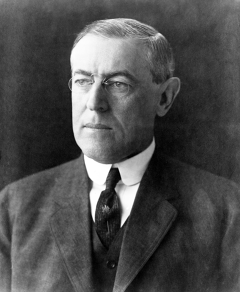
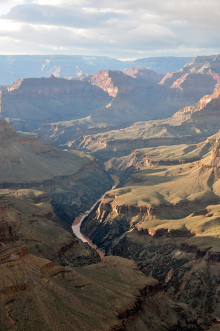
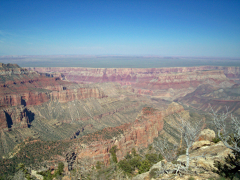
Theodore Roosevelt stood at the rim in 1903 and told anyone who would listen to "leave it as it is" — but it took sixteen more years, two presidents, and a protracted fight against mining interests before the Grand Canyon received the protection it deserved. President Woodrow Wilson signed the act establishing Grand Canyon National Park on February 26, 1919, preserving a landscape that John Wesley Powell had called "the most sublime spectacle on the Earth." The canyon had been under federal protection in some form since 1893, when President Benjamin Harrison designated it a forest reserve. Roosevelt elevated it to a national monument in 1908, using the Antiquities Act to bypass Congress after legislators blocked national park legislation lobbied against by Arizona mining and ranching interests. Mining companies, particularly those working copper and asbestos deposits on the canyon walls, fought the designation in court, arguing the Antiquities Act only applied to small archaeological sites, not 800,000-acre geological wonders. The Supreme Court upheld Roosevelt's authority in 1920. The canyon itself is a geological library. The Colorado River has spent roughly six million years carving through rock layers that span nearly two billion years of Earth's history — almost half the age of the planet laid bare in horizontal bands of limestone, sandstone, shale, and granite. The oldest exposed rocks, the Vishnu Basement Rocks at the inner gorge, formed when the region was covered by ancient seas. The canyon stretches 277 miles long, up to 18 miles wide, and more than a mile deep. The national park designation transformed both the canyon and the emerging idea of public land conservation. Annual visitors grew from 44,000 in 1919 to over six million by the twenty-first century, making the Grand Canyon one of the most visited natural sites on Earth. The park became a cornerstone of the National Park System and a symbol of the principle that some landscapes belong to everyone. Fred Harvey's hotels and the Atchison, Topeka and Santa Fe Railway had already been bringing tourists to the South Rim for decades; national park status ensured the canyon itself would outlast the industries that once threatened to consume it.
February 26, 1919
107 years ago
Key Figures & Places

What Else Happened on February 26
Astronomers began tracking the reign of the Babylonian king Nabonassar, establishing a precise chronological anchor that lasted for centuries. By standardizing …
Ptolemy needed a zero point for his astronomical tables. He chose February 26, 747 BC — the first day of King Nabonassar's reign in Babylon. Not because Nabonas…
Chandragupta I took a title nobody had used in centuries: *samrat*, supreme emperor. Not king. Emperor. He married a Licchavi princess named Kumaradevi and put …
Valentinian I became emperor because nobody else wanted the job. The previous emperor had died suddenly in Bithynia. The army gathered to pick a successor. They…
Solomon had the throne. Géza had the people. By 1074, Hungary was split between the legitimate king and his cousin who controlled two-thirds of the country. The…
The siege of Kaifeng killed more people than the atomic bombs dropped on Japan. Conservative estimates: 600,000 dead, mostly from starvation and disease. The Mo…
Talk to History
Have a conversation with historical figures who witnessed this era. Ask questions, explore perspectives, and bring history to life.