Darwin Reaches Galapagos: Seeds of Evolution Planted
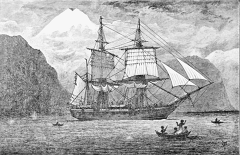
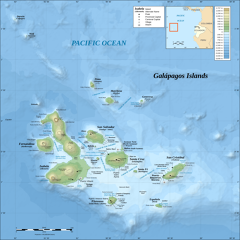
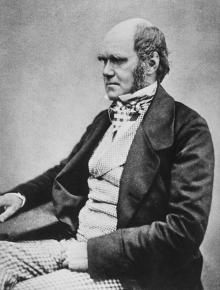
Charles Darwin stepped ashore on San Cristobal Island in the Galapagos archipelago on September 15, 1835, and found himself in a volcanic landscape so bleak and otherworldly that he initially dismissed it as ugly and uninteresting. The twenty-six-year-old naturalist aboard HMS Beagle would spend only five weeks in the islands, collecting specimens almost casually, unaware that the finches, tortoises, and mockingbirds he gathered would eventually demolish the prevailing scientific consensus about the origin of species. The Beagle had been circumnavigating the globe since December 1831, with Darwin serving as the ship’s gentleman naturalist. He had already spent years collecting fossils in South America and studying the geology of the Andes, but the Galapagos presented something different: an isolated archipelago where species varied subtly from island to island, as though each population had been shaped by its particular environment rather than fixed at creation. Darwin noted that the giant tortoises differed in shell shape between islands, and that local residents could identify which island a tortoise came from by its appearance. He collected finches from multiple islands but initially failed to label them by location, an oversight he later regretted. Back in London, ornithologist John Gould examined the specimens and informed Darwin that what he had assumed were different species of wrens, blackbirds, and grosbeaks were in fact all finches, closely related but with beaks adapted to radically different food sources. This realization became a cornerstone of Darwin’s theory of natural selection, though it took him more than twenty years to publish. "On the Origin of Species" appeared in 1859, arguing that species evolved through the gradual accumulation of favorable variations. The Galapagos finches became the textbook illustration of adaptive radiation, the process by which a single ancestor species diversifies into multiple forms to exploit different ecological niches. The islands Darwin found so unremarkable on first impression became the most famous natural laboratory in the history of biology.
September 15, 1835
191 years ago
Key Figures & Places
What Else Happened on September 15
The Nuremberg Laws weren't written in secret — they were announced at a Nazi Party rally, to cheering crowds, as a kind of legislative spectacle. Two laws. One …
An assassin struck Eastern Roman Emperor Constans II while he bathed in Syracuse, ending his life with a blow from a soap dish. His death triggered a chaotic po…
She'd raised her grandson to be a Christian duke and was grandmother to the future king Václav — later Saint Wenceslas. But her daughter-in-law Drahomíra saw Lu…
Fatimid forces crushed a Byzantine army near the Orontes River, halting the empire’s expansion into northern Syria. This defeat forced the Byzantines to abandon…
Before his arrest, Gilles de Rais was one of the wealthiest men in France and had fought alongside Joan of Arc at Orléans. He'd personally financed theatrical p…
A portrait of Saint Dominic appeared under mysterious circumstances in Soriano Calabro on September 15, 1530, generating a wave of local devotion that the Roman…
Talk to History
Have a conversation with historical figures who witnessed this era. Ask questions, explore perspectives, and bring history to life.