Peter I Taxes Beards: Russia Westernizes
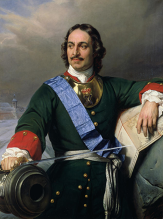
Tsar Peter I imposed a tax on beards as part of his aggressive campaign to Westernize the Russian nobility, requiring those who kept their facial hair to carry a copper token as proof of payment. The decree provoked outrage among the Orthodox faithful who considered beards a religious obligation, but it succeeded in visually separating the modernizing elite from the traditional peasantry. Peter had returned from his 1697-98 Grand Embassy to Western Europe convinced that Russia's medieval customs were holding the country back. At a reception for his nobles, he personally took a razor and shaved the beards off several boyars, shocking the court. When the nobility resisted, he imposed the tax as a compromise: keep your beard, but pay for the privilege. The rates were steep, ranging from 30 to 100 rubles depending on social class, a crushing sum for merchants and minor nobles. The copper "beard tokens" functioned as annual licenses, stamped with a nose, mouth, and beard on one side and "The beard is a superfluous burden" on the other. For Orthodox believers, the decree was more than cosmetic humiliation. Church tradition held that men were created in God's image, which included facial hair, and that shaving was a sin that could jeopardize salvation. Some Old Believers kept their shaved beards in their coffins, hoping to present them at the gates of heaven. Peter didn't care. He was building a navy, a new capital at St. Petersburg, and a bureaucracy modeled on Swedish and Dutch institutions. The beard tax was one component of a comprehensive modernization program that also mandated Western clothing, reformed the calendar, and created Russia's first newspaper.
September 5, 1698
328 years ago
What Else Happened on September 5
Liu Yan declared himself emperor in Panyu, formally establishing the Southern Han state. By asserting imperial authority over the Lingnan region, he secured con…
Swa Saw Ke inherited the kingdom of Ava in central Burma in 1367 and spent the next 33 years doing something unusual for a medieval Southeast Asian monarch: he …
Alexander Farnese maneuvered his Spanish forces to break the siege of Paris, compelling Henry IV to withdraw his troops. This tactical victory preserved the Cat…
Nicolas Fouquet had thrown a party for the King — a housewarming at his château at Vaux-le-Vicomte, so lavish it reportedly made Louis XIV silently furious that…
The Great Fire burned for four days and nights through 13,200 houses and 87 churches, leaving 100,000 people homeless in the ruins of medieval London. The offic…
Pierre Le Moyne d'Iberville fought his way into Hudson Bay through waters most European commanders refused to enter. In 1697 his single ship, the Pélican, engag…
Talk to History
Have a conversation with historical figures who witnessed this era. Ask questions, explore perspectives, and bring history to life.