Japan Surrenders: WWII Ends on Missouri
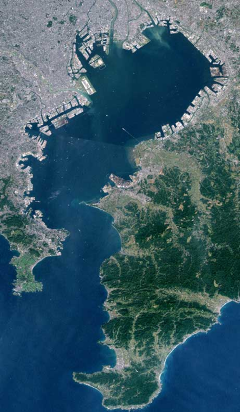
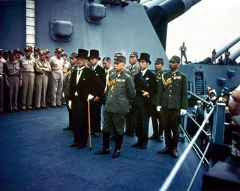
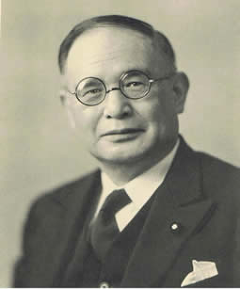
Foreign Minister Mamoru Shigemitsu, in top hat and morning coat, limped across the deck of the USS Missouri on a wooden leg, approached the green baize table, and signed the instrument that ended the most destructive war in human history. General Douglas MacArthur, as Supreme Commander of the Allied Powers, accepted the Japanese surrender in Tokyo Bay on September 2, 1945, closing a conflict that had killed an estimated 70 to 85 million people across six years. The ceremony lasted 23 minutes. The path to the Missouri's deck began with the atomic bombings of Hiroshima on August 6 and Nagasaki on August 9, which killed over 200,000 people and forced Japan's government into an agonizing debate over capitulation. Emperor Hirohito broke the deadlock by personally intervening in favor of surrender, recording a radio address to the nation that most Japanese citizens heard his voice for the first time. A failed coup attempt by junior army officers, who stormed the Imperial Palace trying to destroy the recording, nearly derailed the process in its final hours. Fleet Admiral Chester Nimitz signed for the United States, followed by representatives from China, the United Kingdom, the Soviet Union, Australia, Canada, France, the Netherlands, and New Zealand. MacArthur deliberately used multiple pens during the signing and gave them away as souvenirs, including one to General Jonathan Wainwright, who had endured three years of brutal captivity after surrendering Corregidor. The Missouri, anchored alongside hundreds of Allied warships with a massive American flag flying from the mast, served as a calculated display of the power that had brought Japan to its knees. Japan's formal surrender ended a war that had reshaped the global order entirely. The United States and the Soviet Union emerged as rival superpowers, European colonial empires began their rapid dissolution across Asia, and the United Nations was established to prevent another such catastrophe. September 2 is commemorated as V-J Day, the final punctuation mark on a conflict that remade the modern world.
September 2, 1945
81 years ago
Key Figures & Places
What Else Happened on September 2
Cicero was 62 years old, semi-retired, and knew exactly how dangerous this was. Mark Antony controlled Rome's legions. Cicero controlled words. His first Philip…
Cleopatra VII elevated her young son, Caesarion, to the Egyptian throne as co-ruler, cementing a political alliance with Julius Caesar. By positioning the boy a…
Cleopatra's gilded warship turned and fled through the battle line at Actium on September 2, 31 BC, and Mark Antony abandoned his fleet to chase after her, hand…
Galla Placidia had already been captured by Visigoths, married their king, widowed, ransomed back to Rome, and forced into a second marriage by her own brother …
Richard had spent three years fighting for Jerusalem and never took it. The Treaty of Jaffa was his admission that he couldn't — but he negotiated hard. Saladin…
Mary had been Queen of France, then widowed at 18, then forced to return to a Scotland she barely remembered. When she rode into Edinburgh in August 1561, Prote…
Talk to History
Have a conversation with historical figures who witnessed this era. Ask questions, explore perspectives, and bring history to life.