

Britain Pledges Poland: War With Germany Looms
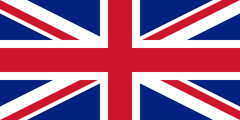
Six days before Germany invaded Poland, the United Kingdom signed a mutual defense pact on August 25, 1939, formally committing itself to military action if Poland were attacked. The Anglo-Polish Agreement was Britain's last attempt to deter Adolf Hitler through the threat of a two-front war. Hitler invaded anyway, and Britain honored the guarantee, plunging Europe into its second catastrophic conflict in a generation. The agreement formalized an earlier British guarantee issued in March 1939 after Germany dismembered Czechoslovakia in violation of the Munich Agreement. Prime Minister Neville Chamberlain, humiliated by the failure of appeasement, publicly pledged that Britain would defend Poland's independence. The March guarantee was unilateral. The August 25 treaty made the commitment mutual and binding, with both nations promising military assistance in the event of aggression by a "European Power," a transparent reference to Germany. Hitler had expected Britain to back down as it had over the Sudetenland. The Anglo-Polish treaty, signed just two days after the Molotov-Ribbentrop Pact between Germany and the Soviet Union, complicated his calculations. Hitler actually postponed the invasion of Poland by several days after learning of the British agreement, hoping to detach Britain from its commitment. German diplomats made last-minute offers to guarantee the British Empire in exchange for a free hand in Eastern Europe. Chamberlain refused. Germany invaded Poland on September 1, 1939. Britain issued an ultimatum demanding withdrawal. When it expired on September 3, Chamberlain broadcast to the nation that Britain was at war with Germany. The guarantee was honored, but Poland itself received no effective military assistance. France and Britain mounted no offensive in the west while Poland was overrun in five weeks. Poland endured six years of brutal occupation by both Germany and the Soviet Union, losing six million citizens. The alliance survived the war, but the Poland that emerged in 1945 was behind the Iron Curtain, its borders redrawn and its sovereignty compromised for another four decades.
August 25, 1939
87 years ago
Key Figures & Places


What Else Happened on August 25

Julian, a 25-year-old Roman prince who had been a philosophy student just two years earlier, led 13,000 legionaries against an Alemanni army nearly three times …
Emperor Constantine V publicly humiliated nineteen high-ranking officials upon uncovering a conspiracy, then executed the ringleaders Constantine Podopagouros a…
The Archbishop of Utrecht granted the Dutch settlement of Ommen official city and fortification rights, elevating it from a rural hamlet to a recognized urban c…
August 25, 1258. George Mouzalon had served as regent for the young Emperor John IV Laskaris of Nicaea — the Byzantine rump state established after Constantinop…
Philip III ascended the French throne while stricken by dysentery during the Eighth Crusade, leaving his uncle Charles I of Naples to force peace talks with the…
The Honourable Artillery Company was granted a royal charter by Henry VIII on August 25, 1537. It is the oldest surviving regiment in the British Army — 488 yea…
Talk to History
Have a conversation with historical figures who witnessed this era. Ask questions, explore perspectives, and bring history to life.