Wallace Executed: Scotland's Hero Dies at Smithfield
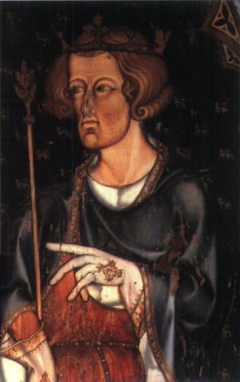
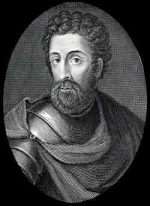
William Wallace was dragged through the streets of London behind horses on August 23, 1305, before being hanged, cut down while still alive, disemboweled, beheaded, and quartered at Smithfield. Edward I of England ordered the pieces of Wallace's body displayed in Newcastle, Berwick, Stirling, and Perth as a warning to anyone who might continue Scotland's fight for independence. The warning failed spectacularly. Wallace had emerged from minor Scottish nobility to lead a national resistance movement after Edward I conquered Scotland in 1296. His victory at the Battle of Stirling Bridge in September 1297, where a small Scottish force destroyed a much larger English army by attacking as it crossed a narrow bridge, made him a national hero. Edward appointed him Guardian of Scotland. But the English returned in force, and Wallace was defeated at the Battle of Falkirk in 1298 by Edward's longbowmen and heavy cavalry. After Falkirk, Wallace resigned the guardianship and spent years traveling, possibly to France and Rome seeking diplomatic support for Scottish independence. He continued guerrilla resistance upon returning to Scotland, but the Scottish nobility increasingly accommodated English rule. In August 1305, Wallace was captured near Glasgow, reportedly betrayed by Sir John de Menteith, a Scottish knight loyal to Edward. He was transported to London and tried in Westminster Hall on charges of treason. Wallace reportedly rejected the treason charge, arguing he had never sworn allegiance to Edward and therefore could not betray him. The court was unmoved. His execution was designed to be the definitive end of Scottish resistance. Instead, Robert the Bruce took up the cause the following year, crowned himself king in 1306, and won Scottish independence at the Battle of Bannockburn in 1314. Wallace never saw the freedom he fought for, but his refusal to submit became the founding myth of Scottish national identity.
August 23, 1305
721 years ago
Key Figures & Places

What Else Happened on August 23
After conquering Egypt, Octavian ordered the execution of Marcus Antonius Antyllus, the eldest son of Marc Antony, and Caesarion, the teenage son of Julius Caes…
Augustus used the Ludi Volcanalici — games held in the precinct of Vulcan's temple — to celebrate Rome's diplomatic triumph over Parthia and the return of the l…
Mount Vesuvius erupted on the feast day of Vulcan, burying Pompeii and Herculaneum under layers of volcanic ash and pumice. This sudden catastrophe perfectly pr…
Roman general Stilicho defeated the Gothic king Radagaisus in 406 AD, executing him and absorbing 12,000 of his warriors into the Roman army or selling them int…
The Germanic chieftain Odoacer was proclaimed King of Italy by his troops after deposing the last Western Roman Emperor, the teenaged Romulus Augustulus, in a b…
Abu Bakr, the first caliph of Islam and closest companion of the Prophet Muhammad, died in Medina in 634 AD after just two years of leadership during which he h…
Talk to History
Have a conversation with historical figures who witnessed this era. Ask questions, explore perspectives, and bring history to life.