

Khomeini Issues Fatwa on Salman Rushdie: $3 Million Bounty for an Author
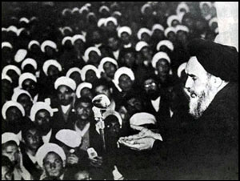
Khomeini issued the fatwa against Salman Rushdie without reading The Satanic Verses. He relied on summaries from advisors. The bounty started at $3 million — Iranian religious foundations later raised it to $3.3 million. Rushdie went into hiding for nine years. His Japanese translator was murdered. His Italian translator was stabbed. His Norwegian publisher was shot. Bookstores that stocked the novel were firebombed. In 2022, thirty-three years later, a man stabbed Rushdie at a literary event in New York. He lost sight in one eye.
February 24, 1989
37 years ago
Key Figures & Places



What Else Happened on February 24
Jules César met en œuvre un nouveau calendrier appelé par la suite calendrier julien en son honneur, le lendemain même du premier jour d'intercalation qui carac…
The Drury Lane Theatre collapsed into ash on February 24, 1809, consuming Richard Brinsley Sheridan’s fortune and his life’s work in a single night. Watching th…
Imperador romano Galério publica o édito para o início da perseguição aos cristãos numa parte do Império Romano.
King Huneric of the Vandals purged his North African kingdom of Nicene bishops, forcibly replacing them with Arian clergy and exiling dissenters to Corsica. Thi…
King Huneric didn't just persecute bishops — he went after the money men too. In 484, the Vandal ruler expelled Christian bishops across North Africa and shippe…
en la villa de Asís (península itálica), Francisco de Asís afirma que escuchó directamente a Jesucristo ordenándole que comenzara su misión.
Talk to History
Have a conversation with historical figures who witnessed this era. Ask questions, explore perspectives, and bring history to life.