Japan Annexes Korea: A Nation Under Colonial Rule
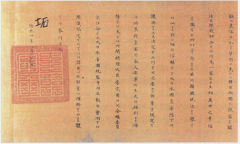
Korean Emperor Sunjong was forced to sign away his country's sovereignty on August 22, 1910, when the Japan-Korea Treaty formally annexed the Korean Peninsula to the Japanese Empire. The signing, conducted under military pressure and without meaningful Korean consent, began 35 years of colonial rule that reshaped Korean society, economy, and national identity. Japan had been tightening its grip on Korea for over a decade. Victory in the Russo-Japanese War of 1905 eliminated Russia as a rival for influence on the peninsula, and the subsequent Japan-Korea Treaty of 1905 made Korea a Japanese protectorate. Resident-General Ito Hirobumi controlled Korean foreign affairs and gradually stripped the Korean government of domestic authority. When Korean activists assassinated Ito in 1909, Japan used the killing as justification to push for full annexation. The Korean royal court, surrounded by Japanese troops, had no ability to resist. Colonial rule was systematic and thorough. Japan dissolved the Korean military, replaced Korean administrators with Japanese officials, and seized vast tracts of agricultural land through a modern land survey that dispossessed farmers who could not produce written titles. Korean-language newspapers were shut down. The colonial government built railroads, ports, and factories, but primarily to extract Korean resources for Japanese industry. During World War II, hundreds of thousands of Koreans were conscripted as forced laborers, and thousands of women were coerced into sexual slavery as so-called "comfort women." Korean resistance never fully disappeared. The March 1st Movement of 1919 saw millions protest across the peninsula, and a government-in-exile operated from Shanghai. Liberation came only with Japan's surrender in August 1945, but the peninsula was immediately divided along the 38th parallel between Soviet and American occupation zones. The legacy of annexation remains one of the most contentious issues in East Asian diplomacy, fueling tensions between South Korea and Japan to this day.
August 22, 1910
116 years ago
Key Figures & Places
What Else Happened on August 22
General Arbogast elevated the rhetorician Eugenius to the Western Roman throne, bypassing the authority of the Eastern Emperor Theodosius I. This bold power pla…
Odoacer was a soldier, not a visionary. He led a coalition of Germanic troops who'd grown tired of waiting for pay and land grants from the Western Roman Empire…
Saint Columba encountered a massive water beast while crossing the River Ness, reportedly commanding the creature to retreat after it attacked a swimmer. This a…
Erispoe’s Breton forces crushed the army of Charles the Bald at the Battle of Jengland, compelling the Frankish king to recognize Breton independence. This vict…
The Battle of the Standard in 1138 takes its name from a ship's mast mounted on a wagon, carrying the banners of Yorkshire saints, that the English army used as…
King Baldwin III's coalition of Templars and Hospitallers seized the fortress of Ascalon from Fatimid Egypt, finally removing the last major Muslim stronghold t…
Talk to History
Have a conversation with historical figures who witnessed this era. Ask questions, explore perspectives, and bring history to life.