L'Orfeo Premieres: Birth of Western Opera
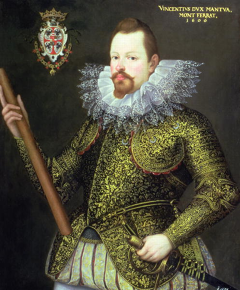
Claudio Monteverdi walked into the Ducal Palace in Mantua on February 24, 1607, and premiered a work that would invent an art form. L'Orfeo, written for the carnival season at the court of Duke Vincenzo Gonzaga, was not the first attempt to set an entire dramatic story to music. But it was the first to succeed so completely that four centuries later it remains in the active repertoire, performed in opera houses around the world. The Florentine Camerata, a circle of intellectuals and musicians, had been experimenting with sung drama since the 1580s, believing they were reviving ancient Greek theater. Jacopo Peri's Dafne (1598) and Euridice (1600) were early attempts, but they were essentially recitative — sung speech with minimal accompaniment, beautiful in theory and monotonous in practice. Monteverdi, the court composer at Mantua and already the most acclaimed musician in Italy, took the Florentine experiments and transformed them through sheer compositional genius. L'Orfeo told the myth of Orpheus, the musician who descends to the underworld to rescue his dead wife Eurydice. Monteverdi deployed an orchestra of roughly forty instruments, unprecedented for the time, and used them dramatically: bright brass and strings for the pastoral scenes, trombones and the eerie sound of the regal organ for the underworld. He wrote arias that expressed genuine human emotion, choruses that commented on the action, and instrumental interludes that advanced the drama without words. The score moves between recitative, aria, and ensemble with a fluidity that would not be matched for decades. The premiere was a triumph, performed before an invited audience of courtiers and intellectuals in a room that held perhaps two hundred people. Opera would spend the next century migrating from aristocratic chambers to public theaters, transforming from courtly entertainment into the dominant art form of European culture. Every opera composed since — from Mozart to Wagner to Puccini — traces its lineage to what Monteverdi accomplished in that palace room in Mantua.
February 24, 1607
419 years ago
Key Figures & Places
What Else Happened on February 24
The Drury Lane Theatre collapsed into ash on February 24, 1809, consuming Richard Brinsley Sheridan’s fortune and his life’s work in a single night. Watching th…
King Huneric of the Vandals purged his North African kingdom of Nicene bishops, forcibly replacing them with Arian clergy and exiling dissenters to Corsica. Thi…
King Huneric didn't just persecute bishops — he went after the money men too. In 484, the Vandal ruler expelled Christian bishops across North Africa and shippe…
The English brought 30,000 men to Roslin. The Scots had 8,000. But the English arrived in three separate columns, hours apart. The Scots attacked each one befor…
Charles had been king for 61 days. He'd claimed Hungary's throne after the previous king died without a male heir, but Hungary's nobles never wanted him. They w…
King Charles III of Naples and Hungary succumbed to his wounds in Buda after a group of Hungarian nobles ambushed him with a poisoned blade. His sudden death pl…
Talk to History
Have a conversation with historical figures who witnessed this era. Ask questions, explore perspectives, and bring history to life.