

Sue the T-Rex Found: Largest and Most Complete T. Rex Skeleton
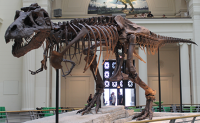
Sue Hendrickson spotted protruding T. rex bones after her truck tire deflated on August 12, 1990, leading to the discovery of the most complete Tyrannosaurus ever found. This specimen preserved eighty percent of its skeleton, including a massive skull with intact teeth, because rushing water and mud buried it immediately after death. The find revolutionized paleontology by providing an unprecedented look at T. rex anatomy that previous fragmented fossils could never offer.
August 12, 1990
36 years ago
Key Figures & Places

What Else Happened on August 12
en Grecia se libra la batalla de Maratón, donde los griegos derrotaron a los invasores persas. Dos días después habría sucedido la fábula de Filípides (que corr…

Cleopatra VII ends her life with an alleged asp bite, extinguishing the last spark of Egypt's independent Ptolemaic dynasty and handing the Nile valley to Rome …
Auf der Welser Heide besiegt ein bayerisches Heeresaufgebot unter Herzog Berthold eindringende Magyaren. Die Ungarneinfälle lassen daraufhin für mehrere Jahre n…
en Palmira (Siria) y en Baalbek (Líbano) queda registrado un terremoto que deja más 50.000 víctimas en la región.

The Crusaders won the Battle of Ascalon on August 12, 1099, routing the Fatimid army sent to reclaim Jerusalem. The city had fallen to the Crusaders five weeks …

At the Battle of Didgori in 1121, King David IV of Georgia attacked a Seljuk force that outnumbered his army by a ratio sometimes estimated at 8-to-1. He used a…
Talk to History
Have a conversation with historical figures who witnessed this era. Ask questions, explore perspectives, and bring history to life.