Singapore Born: A Nation Expelled into Independence
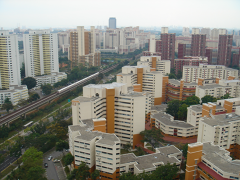
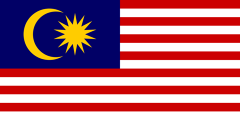
Lee Kuan Yew wept on national television, and a nation was born from rejection. On August 9, 1965, Singapore was expelled from the Federation of Malaysia, becoming the only country in modern history to gain independence against its will. The separation followed two years of escalating racial tensions, political disputes, and economic disagreements between Singapore's predominantly Chinese leadership and the Malay-dominated federal government in Kuala Lumpur. Lee, Singapore's prime minister, called the day "a moment of anguish." Singapore had merged with Malaya, Sabah, and Sarawak to form Malaysia in 1963, driven partly by security concerns and partly by the belief that a larger common market would benefit everyone. The union was troubled from the start. Lee's People's Action Party advocated a "Malaysian Malaysia" with equal rights regardless of ethnicity, directly challenging the Malay special privileges enshrined in the federal constitution. Race riots broke out in Singapore in 1964, killing dozens and deepening the rift. Malaysian Prime Minister Tunku Abdul Rahman concluded that Singapore's continued presence in the federation threatened national stability. The expulsion left Singapore in a precarious position. The island had no natural resources, limited fresh water supply, no hinterland, and a population of roughly 1.9 million. Surrounded by larger, potentially hostile neighbors, its survival as an independent state was far from assured. The British military withdrawal announced in 1968 removed another pillar of security. Conventional wisdom held that the city-state was too small to be viable. Lee Kuan Yew and his government proved the skeptics spectacularly wrong. Through aggressive industrialization, strict governance, massive investment in education, and a deliberate policy of multiracial meritocracy, Singapore transformed itself from a developing port city into one of the wealthiest nations on earth per capita within a single generation. The country expelled against its will became one of the most remarkable success stories of the post-colonial era.
August 9, 1965
61 years ago
Key Figures & Places
What Else Happened on August 9
Julius Caesar met Pompey at Pharsalus in August 48 BC, and it was over in hours. Pompey had the larger army. Caesar had positioned himself on lower ground, whic…
Visigoth cavalry encircled and destroyed a massive Roman army at Adrianople, killing Emperor Valens and more than half his troops in the worst Roman military de…
Bulgaria was founded as a Khanate in 681 AD after Khan Asparuh's forces defeated the Byzantine army near the Danube delta. Emperor Constantine IV recognized the…
Pope Damasus II died in Rome just 23 days after his consecration, likely from malaria contracted during his journey to the city. His sudden passing left the pap…
Construction began on the campanile of the Cathedral of Pisa in 1173, launching a building project that would take nearly two centuries to complete. The tower b…
Quilon was designated as the first Indian Christian diocese in 1329 by Pope John XXII, with the French Dominican friar Jordanus of Sévérac appointed bishop. Chr…
Talk to History
Have a conversation with historical figures who witnessed this era. Ask questions, explore perspectives, and bring history to life.