Salk Vaccine Tested: 1.8 Million Children Unite
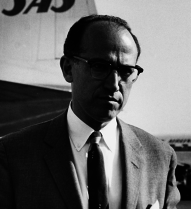
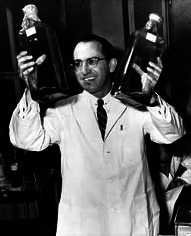
More Americans could identify the polio vaccine field trial than could name the president of the United States. That single statistic captures the terror that poliomyelitis inspired in 1950s America, where every summer brought a new wave of paralysis and iron lungs, and parents kept their children away from swimming pools and movie theaters in desperate hope of avoiding infection. Jonas Salk, a forty-year-old virologist at the University of Pittsburgh, had developed a killed-virus vaccine that he believed could prevent the disease. But proving it required the largest public health experiment ever attempted. The National Foundation for Infantile Paralysis, funded by the March of Dimes, organized a field trial involving 1.8 million schoolchildren across forty-four states. Twenty thousand physicians, sixty-four thousand school personnel, and two hundred twenty thousand volunteers participated. More than a hundred million Americans had contributed money to make the trial possible. The first inoculations began on April 26, 1954, at Franklin Sherman Elementary School in McLean, Virginia. Children received either the vaccine or a placebo in a double-blind study — a design that Salk initially resisted, believing it unethical to give children a dummy shot. The trial ran through the spring, and families waited nearly a year for results. On April 12, 1955, researcher Thomas Francis Jr. announced at the University of Michigan that the vaccine was "safe, effective, and potent." Church bells rang across the country. People wept in the streets. Polio had paralyzed an average of thirty-five thousand Americans annually in the early 1950s. By 1962, cases had dropped to fewer than a thousand. Salk refused to patent the vaccine or profit from it. When Edward R. Murrow asked who held the patent, Salk replied, "The people. Could you patent the sun?" The answer cost him an estimated seven billion dollars but helped eradicate polio from the Western Hemisphere by 1994.
February 23, 1954
72 years ago
Key Figures & Places
What Else Happened on February 23
Diocletian's soldiers arrived at the church in Nicomedia on February 23, 303, stripped the building, and burned every manuscript they could find. No bloodshed t…
Justinian ordered the Hagia Sophia built after rioters burned down the previous church during the Nika riots — the same riots where he nearly fled the city unti…
Khosrow II lost an empire because he refused to believe his generals. The Sasanian shah had ruled for 38 years, conquered Egypt and Syria, laid siege to Constan…
Wu Zetian ruled China for fifteen years as its only female emperor. She'd clawed her way from concubine to empress to sovereign, killing rivals, promoting schol…
Every book you have ever read exists because of a goldsmith in Mainz who figured out how to cast individual metal letters and lock them into a frame. Johannes G…
Lautaro had been a Spanish stable boy. He'd fed their horses, watched their drills, learned how they fought. At Marihueñu, he used that knowledge. He let the Sp…
Talk to History
Have a conversation with historical figures who witnessed this era. Ask questions, explore perspectives, and bring history to life.