

Dolly the Sheep: First Cloned Adult Mammal Announced
Scientists at Scotland's Roslin Institute had kept a secret for seven months: a lamb born the previous July was genetically identical to a six-year-old ewe, the first mammal ever cloned from an adult cell. When the team announced Dolly's existence on February 22, 1997, the news detonated across every front page in the world and forced an immediate global reckoning with the possibilities and dangers of genetic manipulation. The breakthrough had seemed biologically impossible. Prevailing scientific wisdom held that once a cell specialized — becoming a skin cell, a liver cell, a mammary cell — its developmental clock could not be reset. Ian Wilmut and Keith Campbell proved otherwise by starving a mammary cell from a Finn Dorset ewe into a dormant state, then fusing it with an enucleated egg cell from a Scottish Blackface sheep. Of 277 attempts, only one produced a viable embryo. Dolly was named after Dolly Parton because the donor cell came from a mammary gland. The scientific achievement was staggering but the cultural shockwave was larger. Within days, President Clinton ordered a review of federal cloning policy. The Vatican condemned the research. Bioethicists warned of slippery slopes toward human cloning. Scientists countered that the real promise lay in therapeutic applications — growing replacement tissues, preserving endangered species, advancing understanding of cellular reprogramming. Dolly lived six years before being euthanized due to progressive lung disease and severe arthritis, conditions that raised questions about whether cloned animals age prematurely. Her legacy extends far beyond her own short life. The techniques pioneered at Roslin led directly to the development of induced pluripotent stem cells in 2006, work that won Shinya Yamanaka the Nobel Prize and opened the door to regenerative medicine without the ethical complications of embryonic stem cell research. Dolly's taxidermied body stands in Edinburgh's National Museum of Scotland.
February 22, 1997
29 years ago
Key Figures & Places
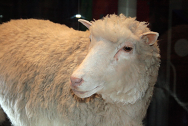
Dolly the sheep
Wikipedia

Roslin, Scotland
Wikipedia
Domestic sheep
Wikipedia
cloning
Wikipedia

Roslin, Midlothian
Wikipedia

Dolly (sheep)
Wikipedia

Cloning
Wikipedia

Scotland
Wikipedia

Robert II of Scotland
Wikipedia

House of Stuart
Wikipedia

Mammalia
Wikipedia

Cellule somatique
Wikipedia

List of Scottish monarchs
Wikipedia
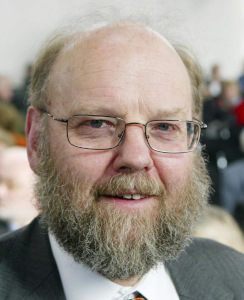
Ian Wilmut
Wikipedia

Nature (journal)
Wikipedia

Scotland
Wikipedia
What Else Happened on February 22
A palace coup executed the Zhang brothers and forced Empress Wu Zetian to abdicate on February 22, 705, restoring the Tang dynasty after fifteen years of her Zh…
Pope Formosus crowned Arnulf of Carinthia as Holy Roman Emperor in Rome, cementing an alliance between the papacy and the Carolingian successor state. Arnulf su…
Pope Gregory VII excommunicated Holy Roman Emperor Henry IV, stripping him of his royal authority and releasing his subjects from their oaths of allegiance. Thi…
Girolamo Maschi became the first Franciscan pope in 1288. The Franciscans had existed for 68 years. They'd taken vows of absolute poverty — no money, no propert…
Ferdinand of Majorca fell in battle against the forces of Matilda of Hainaut near Picotin, ending his aggressive campaign to claim the Principality of Achaea. H…
Robert II waited 55 years to become king. He was named heir in 1318 as a child. He didn't take the throne until 1371. He was 55 years old — ancient by medieval …
Talk to History
Have a conversation with historical figures who witnessed this era. Ask questions, explore perspectives, and bring history to life.