Coolidge Broadcasts from White House: Radio Era Dawns
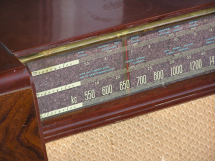
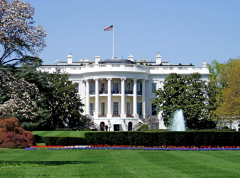
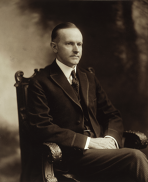
The president's voice crackled through living rooms across the nation for the first time, and American politics would never be the same. Calvin Coolidge, a man so famously taciturn that a dinner guest once bet she could get him to say more than two words (he replied, "You lose"), became the first sitting president to deliver a political address over radio from the White House on February 22, 1924. Radio was still a novelty. The first commercial station, KDKA in Pittsburgh, had only been broadcasting since 1920. By 1924, an estimated three million American homes had radio receivers, and the number was growing exponentially. Coolidge's address — a Washington's Birthday speech carried by five stations — reached a potential audience of millions, dwarfing any crowd that had ever gathered for a presidential speech. The technology was so new that the White House had to install temporary equipment for the broadcast. Coolidge, who had assumed the presidency after Warren Harding's death just six months earlier, proved surprisingly well-suited to the medium. His calm, measured New England delivery worked better through a speaker than the booming oratory that dominated political rallies. He went on to use radio extensively during his 1924 campaign, broadcasting from the White House rather than barnstorming the country — a strategy that suited both his personality and the new technology. The broadcast inaugurated the era of the electronic presidency. Within a decade, Franklin Roosevelt would master the medium with his fireside chats, using radio to build an unprecedented personal connection with voters. Coolidge's quiet experiment demonstrated that political power could be projected without physical presence, a principle that would reshape democratic politics through television and eventually social media. The president no longer needed to travel to the people; the people could come to the president.
February 22, 1924
102 years ago
Key Figures & Places
What Else Happened on February 22
A palace coup executed the Zhang brothers and forced Empress Wu Zetian to abdicate on February 22, 705, restoring the Tang dynasty after fifteen years of her Zh…
Pope Formosus crowned Arnulf of Carinthia as Holy Roman Emperor in Rome, cementing an alliance between the papacy and the Carolingian successor state. Arnulf su…
Pope Gregory VII excommunicated Holy Roman Emperor Henry IV, stripping him of his royal authority and releasing his subjects from their oaths of allegiance. Thi…
Girolamo Maschi became the first Franciscan pope in 1288. The Franciscans had existed for 68 years. They'd taken vows of absolute poverty — no money, no propert…
Ferdinand of Majorca fell in battle against the forces of Matilda of Hainaut near Picotin, ending his aggressive campaign to claim the Principality of Achaea. H…
Robert II waited 55 years to become king. He was named heir in 1318 as a child. He didn't take the throne until 1371. He was 55 years old — ancient by medieval …
Talk to History
Have a conversation with historical figures who witnessed this era. Ask questions, explore perspectives, and bring history to life.