Athelstan Unifies Britain: Scotland Pledges Loyalty
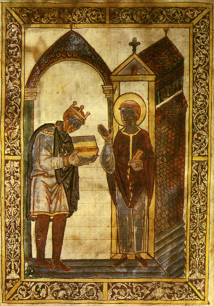
England's first true king forced every rival power in Britain to bend the knee at a single gathering, forging a political unity the island had not seen since the Romans departed five centuries earlier. Athelstan, grandson of Alfred the Great, compelled Constantine II of Scotland, Hywel Dda of Wales, Ealdred of Bamburgh, and Owen of Strathclyde to submit at Eamont Bridge in Cumbria in July 927. The meeting established English dominance over the entire island and created the template for British royal authority. Athelstan had inherited the throne of Wessex and Mercia from his father Edward the Elder in 924, already controlling the largest Anglo-Saxon kingdom. But his ambitions extended far beyond his grandfather's legacy. Alfred had dreamed of unifying the English-speaking kingdoms; Athelstan wanted hegemony over all of Britain. His opportunity came when Sihtric, the Viking king of York, died in 927. Athelstan marched north, seized York without significant resistance, and expelled Sihtric's heir Guthfrith. The submission at Eamont Bridge was as much diplomatic theater as genuine surrender. The gathered rulers acknowledged Athelstan as overlord, likely in exchange for guarantees of their own territorial integrity. Constantine pledged not to ally with the Vikings, a promise he would later break spectacularly. Hywel Dda of Wales became a genuine ally, regularly attending Athelstan's court and modeling his own law codes on English precedents. Athelstan backed his diplomatic achievements with military force when necessary. After Constantine broke his oath and allied with the Vikings and Strathclyde Welsh, Athelstan crushed the coalition at the Battle of Brunanburh in 937, a victory celebrated in an Anglo-Saxon poem as the greatest battle since the Germanic migrations. When Athelstan died in 939, he left behind the concept of a unified English kingdom that, despite setbacks, would never fully dissolve.
July 12, 927
1099 years ago
Key Figures & Places
What Else Happened on July 12
Titus's legions smashed through Jerusalem's battered walls three days after breaching the outer perimeter, unleashing a fire that consumed the Second Temple and…
King Æthelstan of England secured the submission of Scotland's Constantine II, Wales' Hywel Dda, and northern leaders Ealdred and Owain at a meeting that ended …
Saladin’s garrison surrendered Acre to King Philip II of France, concluding a brutal two-year siege that claimed thousands of lives. This victory secured a vita…
Pope Benedict XII issued the papal bull Fulgens sicut stella matutina on July 12, 1335, to enforce stricter discipline within the Cistercian Order. This decree …
The Venetians called it Negroponte—their richest colony, holding the narrows between mainland Greece and Euboea. Sultan Mehmed II brought 100,000 men and siege …
Anne Neville's wedding gown concealed a secret: her groom had helped kill her father-in-law just months earlier. The Earl of Warwick's daughter married Richard …
Talk to History
Have a conversation with historical figures who witnessed this era. Ask questions, explore perspectives, and bring history to life.