Wimbledon Opens: Birth of Championship Tennis
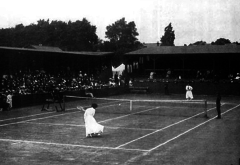
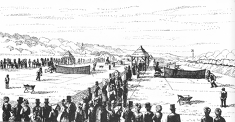
Twenty-two men paid one guinea each to enter the first lawn tennis championship at the All England Croquet Club in Wimbledon on July 9, 1877. Roughly 200 spectators watched the matches, paying one shilling each for admission. Spencer Gore, a 27-year-old surveyor and cricket player, won the tournament in straight sets against William Marshall, using a net-rushing style that other players considered unsportsmanlike. The tournament that began as a modest fundraiser to fix a broken pony roller became the most prestigious tennis event in the world. The All England Club had added lawn tennis to its offerings only the previous year, recognizing that the new sport was rapidly overtaking croquet in popularity. Major Walter Clopton Wingfield had patented a version of the game in 1874 under the name Sphairistike, and the sport spread with extraordinary speed through Britain s upper and middle classes. The club s committee, led by Henry Jones, drafted the rules for the championship, establishing a rectangular court, the current scoring system, and service rules that remain largely unchanged. The early tournaments were played on croquet lawns, and the grass was maintained to croquet standards — short and fast. Players wore long trousers and street clothes. The overhand serve had not yet been developed; most players served underhand. Rallies were won through placement and patience rather than power. The entire first championship was completed in four days with no seedings, draws, or byes. Women s singles were added in 1884, with Maud Watson winning the inaugural championship. Mixed doubles followed. The tournament moved from Worple Road to its current Church Road grounds in 1922, expanding to accommodate growing crowds. The Centre Court, with its famous ivy-covered walls and royal box, became a cathedral of the sport. Wimbledon has survived two World Wars, with Centre Court sustaining bomb damage from a Luftwaffe raid in 1940. The tournament remained amateur until 1968, when the Open Era allowed professional players to compete. The all-white clothing requirement, grass courts, and strawberries-and-cream tradition have preserved a connection to the tournament s Victorian origins that no other Grand Slam maintains. The one-guinea entry fee has given way to prize money exceeding 40 million pounds.
July 9, 1877
149 years ago
Key Figures & Places
What Else Happened on July 9
Hadrian waited 367 days to enter his own capital. The new emperor spent that first year securing borders, executing four senators he claimed plotted against him…
Emperor Theodosius I concluded the First Council of Constantinople, formalizing the Nicene Creed as the official doctrine of the Roman Empire. By codifying the …
The Roman military commander Avitus ascended to the throne in Gaul, proclaimed Emperor by the Visigothic King Theodoric II. This elevation signaled the desperat…
The Heruli guardsmen attacked at night, elite troops betting everything on darkness and surprise. Odoacer had ruled Italy for fifteen years—longer than most emp…
A massive earthquake shattered Beirut and triggered a violent tsunami that leveled the coastal cities of Byzantine Phoenicia. This disaster claimed thousands of…
General Kim Yu-sin's Silla forces crushed the Baekje army at Hwangsanbeol, shattering their military power after fierce fighting that reportedly claimed thousan…
Talk to History
Have a conversation with historical figures who witnessed this era. Ask questions, explore perspectives, and bring history to life.