Malcolm X Assassinated: Civil Rights Movement Shocked
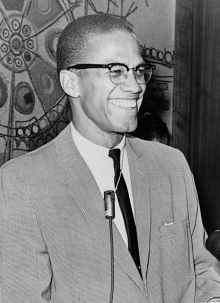
Twenty-one gunshots tore through the Audubon Ballroom on a Sunday afternoon, and the most electrifying voice in American civil rights fell silent at thirty-nine. Malcolm X had been speaking for barely a minute when a disturbance erupted in the crowd of four hundred — a man shouted, bodyguards moved toward the commotion, and three assassins rushed the stage with a sawed-off shotgun and two handguns. Malcolm had spent the previous year reinventing himself. After his 1964 split with the Nation of Islam and a transformative pilgrimage to Mecca, he founded the Organization of Afro-American Unity, embracing a broader vision of racial solidarity that transcended the separatism of his earlier years. His public break with Elijah Muhammad and the Nation made him a marked man. His home had been firebombed just a week earlier. The shooting unfolded in seconds. Thomas Hagan fired a shotgun blast into Malcolm's chest at close range while two accomplices emptied their pistols. Ten buckshot wounds and eleven bullet wounds were counted in the autopsy. He was pronounced dead at Columbia Presbyterian Hospital at 3:30 p.m. Hagan was caught and beaten by the crowd before police arrived. Two other Nation of Islam members, Norman Butler and Thomas Johnson, were arrested and convicted alongside him, though Hagan consistently maintained they were not involved. All three received life sentences in March 1966. The assassination sent shockwaves through the civil rights movement and beyond. The Autobiography of Malcolm X, published months later with journalist Alex Haley, became one of the most influential books of the twentieth century. In 2021, Manhattan prosecutors vacated the convictions of Butler and Johnson after a reinvestigation confirmed what Hagan had said for decades — they were innocent. The case remains a stark reminder of how institutional failures can compound the tragedy of political assassination.
February 21, 1965
61 years ago
Key Figures & Places
What Else Happened on February 21
Athanasius walked back into Alexandria after his third exile. He'd been bishop there since 328. He'd been thrown out in 336, 339, and 356. Three different emper…
Severianus refused to hand over the church's sacred texts. Roman officials in Palestine had ordered all Christian bishops to surrender their scriptures for burn…
Thomas, Finland's first known bishop, resigned in 1245 after confessing to both torture and forgery, ending a twenty-year episcopate that had established Christ…
The Prussian Confederation formed when 53 Prussian cities and nobles decided they'd rather fight their own king than keep paying his war taxes. They were techni…
Ahmed ibn Ibrahim al-Ghazi, known as "Ahmed Gragn" or "the Left-Handed," had conquered approximately two-thirds of the Ethiopian Christian empire by the time he…
A sixteen-year-old hiding in a monastery became Tsar of all Russia on February 21, 1613, because the national assembly that elected him calculated that he was t…
Talk to History
Have a conversation with historical figures who witnessed this era. Ask questions, explore perspectives, and bring history to life.