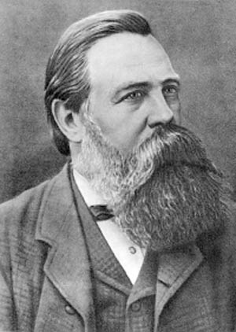
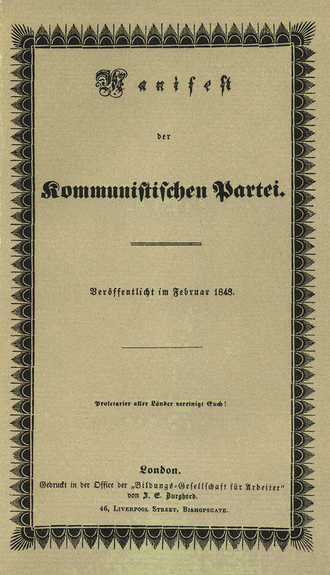
Marx and Engels Publish: The Communist Manifesto
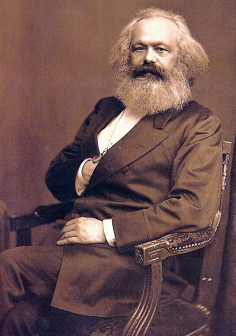
A twenty-three-page pamphlet written by two men in their twenties would reshape the political landscape of the next two centuries. When Karl Marx and Friedrich Engels published The Communist Manifesto in London in February 1848, they could not have known that its opening line — "A spectre is haunting Europe" — would become one of the most quoted phrases in political history. The Communist League, a small organization of German emigres, had commissioned the work the previous year. Marx, living in Brussels and perpetually short of money, was supposed to deliver the manuscript by February 1. He missed the deadline. The League sent an ultimatum threatening "further measures" if the text did not arrive. Marx finally finished in late January, drawing heavily on Engels's earlier draft, "Principles of Communism," while adding his own historical and philosophical framework. The Manifesto appeared just as revolution swept across Europe. Within weeks of publication, uprisings erupted in France, Germany, Austria, and Italy. The pamphlet laid out a theory of class struggle, argued that capitalism contained the seeds of its own destruction, and called on workers worldwide to unite. Its analysis of how industrial capitalism concentrates wealth, displaces traditional economies, and creates a global market reads with striking relevance today. Marx and Engels described a world where "all that is solid melts into air" — a metaphor for the relentless disruption that defines modern economic life. The immediate impact was modest. The 1848 revolutions failed, and Marx spent decades in London poverty refining his ideas into Das Kapital. But the Manifesto endured, eventually translated into every major language and adopted as foundational text by movements that would govern half the world's population by the mid-twentieth century. Whether credited with liberation or blamed for totalitarianism, no political pamphlet has ever matched its reach.
February 21, 1848
178 years ago
Key Figures & Places
What Else Happened on February 21
Athanasius walked back into Alexandria after his third exile. He'd been bishop there since 328. He'd been thrown out in 336, 339, and 356. Three different emper…
Severianus refused to hand over the church's sacred texts. Roman officials in Palestine had ordered all Christian bishops to surrender their scriptures for burn…
Thomas, Finland's first known bishop, resigned in 1245 after confessing to both torture and forgery, ending a twenty-year episcopate that had established Christ…
The Prussian Confederation formed when 53 Prussian cities and nobles decided they'd rather fight their own king than keep paying his war taxes. They were techni…
Ahmed ibn Ibrahim al-Ghazi, known as "Ahmed Gragn" or "the Left-Handed," had conquered approximately two-thirds of the Ethiopian Christian empire by the time he…
A sixteen-year-old hiding in a monastery became Tsar of all Russia on February 21, 1613, because the national assembly that elected him calculated that he was t…
Talk to History
Have a conversation with historical figures who witnessed this era. Ask questions, explore perspectives, and bring history to life.