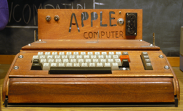
Apple I Tested: Wozniak Sparks Personal Computing Era
Steve Wozniak typed a character on a keyboard and watched it appear on a television screen, and the personal computer revolution left the garage. In late June 1975, Wozniak demonstrated the first working prototype of what would become the Apple I at the Homebrew Computer Club in Palo Alto, California, showing a roomful of electronics hobbyists that a computer could be built cheaply enough for an individual to own and simple enough for a non-engineer to use. The Apple I was a radical departure from every computer then available. Commercial minicomputers cost tens of thousands of dollars and required professional operators. The hobbyist kits that had begun appearing in 1975, like the Altair 8800, shipped as bags of components that required extensive soldering and had no keyboard or display. Wozniak’s design used a standard television as a monitor and accepted input from a regular keyboard, eliminating the toggle switches and blinking lights that defined computing at the time. Wozniak’s engineering genius was in simplification. While the Altair required more than a hundred chips, Wozniak achieved comparable functionality with roughly thirty, an elegant design that dramatically reduced cost and complexity. His friend Steve Jobs saw commercial potential that Wozniak, a Hewlett-Packard engineer who initially wanted to give his designs away free, had not considered. Jobs sold his Volkswagen van and Wozniak sold his HP calculator to raise $1,300 in startup capital, and they began assembling boards in the Jobs family garage. The Apple I went on sale in July 1976 for $666.66, and roughly 200 units were sold, mostly to hobbyists and electronics stores. The machine’s true significance was as a proof of concept for the Apple II, released in 1977, which became the first mass-market personal computer and established Apple as a major technology company. The Apple I prototype Wozniak demonstrated at the Homebrew Computer Club is now among the most valuable artifacts in computing history, with surviving units selling at auction for more than $400,000.
June 29, 1975
51 years ago
Key Figures & Places

What Else Happened on June 29
Cao Rui was 22 when he inherited an empire still bleeding from his father's failures. Cao Pi had spent years chasing total conquest of China and died with nothi…
Cao Pi succumbed to illness, ending his seven-year reign as the first emperor of the Cao Wei dynasty. His son, Cao Rui, immediately ascended the throne, inherit…
Nur ad-Din Zangi crushed the Crusader army at the Battle of Inab, killing Prince Raymond of Poitiers and scattering his forces. This decisive victory shattered …
A devastating earthquake struck Syria, destroying large sections of Hama and Shaizar and severely damaging the Crusader fortress Krak des Chevaliers and the cat…
The Church refused to crown him. So Sverre crowned himself. A former Faroese priest with a disputed claim to the Norwegian throne, Sverre Sigurdsson had spent y…
Sverre didn't just become King of Norway — he became the man the Pope refused to recognize. He claimed descent from King Eystein II, a story many doubted, but h…
Talk to History
Have a conversation with historical figures who witnessed this era. Ask questions, explore perspectives, and bring history to life.