Obninsk Powers Grid: World's First Nuclear Station Goes Live
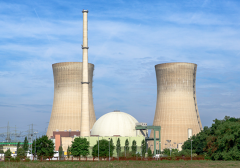
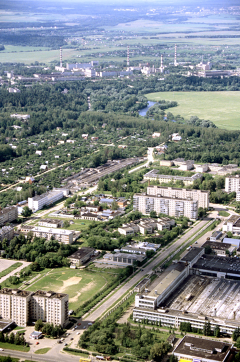
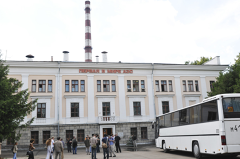
A small nuclear reactor in a Soviet research town began feeding electricity into the power grid, and the atomic age acquired its most practical application. On June 27, 1954, the Obninsk Nuclear Power Plant, located roughly 60 miles southwest of Moscow, became the world’s first nuclear power station to generate electricity for civilian use, producing about five megawatts of electrical power, enough to supply a small town. The plant was built under the scientific direction of Igor Kurchatov, the physicist who had led the Soviet atomic bomb program, and designed by Nikolai Dollezhal. The reactor used a graphite-moderated, water-cooled design with enriched uranium fuel, a configuration that would become standard in Soviet nuclear engineering. The entire project was completed in roughly three years, driven by both scientific ambition and the Soviet leadership’s desire to demonstrate peaceful applications of nuclear technology alongside its military program. Obninsk’s output was tiny by later standards. The reactor’s thermal capacity of 30 megawatts yielded only five megawatts of electricity, enough to power perhaps 2,000 homes. But the achievement was conceptual rather than practical: it proved that nuclear fission could be harnessed for sustained, controlled electricity generation. The announcement was a propaganda victory for the Soviet Union, coming just a year after Stalin’s death and at a moment when both superpowers were competing to show that atomic energy could serve humanity rather than destroy it. The plant operated for 48 years, far exceeding its original design life, before being shut down on April 29, 2002. During its operational lifetime, it served primarily as a research facility, training nuclear engineers and testing fuel designs that informed the next generation of Soviet reactors. The graphite-moderated, water-cooled design pioneered at Obninsk was scaled up dramatically in subsequent decades, eventually producing the RBMK reactors, the same type that catastrophically failed at Chernobyl in 1986.
June 27, 1954
72 years ago
Key Figures & Places
What Else Happened on June 27
A city-state the size of a small county held off the Ottoman Empire, the Venetian Republic, and every other regional bully for centuries — through diplomacy, no…
Blacksmith Michael An Gof and lawyer Thomas Flamank met their ends at Tyburn after leading thousands of Cornishmen on a march to London to protest crushing war …
Amerigo Vespucci wasn't supposed to be famous. Columbus got there first, got the credit, got the statues. But Vespucci wrote better letters. His vivid accounts …
Thirteen Protestants perished at the stake in Stratford-le-Bow, condemned for refusing to renounce their faith during the Marian persecutions. This public execu…
Peter the Great shattered the Swedish Empire’s dominance at the Battle of Poltava, forcing Charles XII into exile in the Ottoman Empire. This decisive Russian v…
King George II personally led his troops into the fray at the Battle of Dettingen, securing a victory against the French. This engagement remains the final inst…
Talk to History
Have a conversation with historical figures who witnessed this era. Ask questions, explore perspectives, and bring history to life.