

Kennedy Declares "Ich Bin Ein Berliner" to Thousands
Four hundred and fifty thousand West Berliners packed the square in front of City Hall, and the American president gave them the four most famous words of the Cold War. On June 26, 1963, John F. Kennedy declared "Ich bin ein Berliner" to a crowd that erupted with a roar audible blocks away, delivering what many historians consider the greatest Cold War speech and a defining moment of American solidarity with the people of divided Berlin. Kennedy arrived in West Berlin less than two years after the construction of the Berlin Wall, which had sealed the border between East and West Berlin on August 13, 1961. The wall was a concrete admission of failure by the Soviet bloc: nearly 3.5 million East Germans had fled to the West through Berlin since 1949, draining the country of its most educated and skilled workers. The wall stopped the exodus but created a permanent symbol of communist oppression. The speech was partly improvised. Kennedy had prepared remarks but was so moved by the crowd’s reception that he departed from his text. The famous line, written phonetically on a note card by his translator, was delivered twice, framing an argument that freedom’s meaning was clearest in Berlin, where the contrast between systems was literally visible from the platform where Kennedy stood. He could see into East Berlin from the podium, and the empty streets on the other side of the wall spoke louder than any rhetoric. The speech infuriated Soviet leader Nikita Khrushchev and embarrassed East German authorities, who jammed radio broadcasts to prevent their citizens from hearing it. Kennedy’s Berlin visit strengthened West German confidence in the American security guarantee at a time when the alliance was under strain. The speech endured far beyond its political moment, becoming a permanent reference point for American foreign policy and the rhetorical standard against which every subsequent presidential address in Berlin has been measured.
June 26, 1963
63 years ago
Key Figures & Places
United States
Wikipedia
Soviet Union
Wikipedia
West Germany
Wikipedia
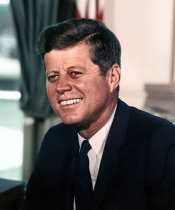
John F. Kennedy
Wikipedia
East Germany
Wikipedia
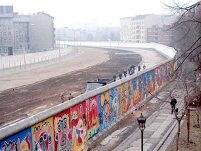
Berlin Wall
Wikipedia
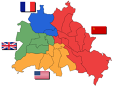
Ich bin ein Berliner
Wikipedia

John F. Kennedy
Wikipedia

Ich bin ein Berliner
Wikipedia

West Germany
Wikipedia
Soviet Union
Wikipedia

East Germany
Wikipedia

Berlin Wall
Wikipedia

World War II
Wikipedia

Molotov–Ribbentrop Pact
Wikipedia

Soviet occupation of Bessarabia and Northern Bukovina
Wikipedia

Kingdom of Romania
Wikipedia

Bessarabia
Wikipedia

Bukovina
Wikipedia

Social Democratic Party of Germany
Wikipedia

Karl Wienand
Wikipedia
President
Wikipedia

Rathaus Schöneberg
Wikipedia

Berlin
Wikipedia
German language
Wikipedia

Eastern Front (World War II)
Wikipedia
Kesselschlacht
Wikipedia

Batalla de Białystok-Minsk
Wikipedia
Romania
Wikipedia

Turkey
Wikipedia

Flag Day
Wikipedia
What Else Happened on June 26
Augustus didn't want Tiberius. He wanted his grandsons, Gaius and Lucius — young, bloodline-pure, the heirs he'd groomed for years. Both died young. So in 4 AD,…
Elagabalus adopted Alexander Severus because his grandmother forced him to. Julia Maesa had already decided her grandson was a disaster — too erratic, too stran…
Julian took a spear to the liver while retreating from Persia — and nobody knows who threw it. His own soldiers were suspects. The last pagan emperor of Rome ha…
Julian didn't die in battle — he died from a spear thrown by someone in his own retreating column. Nobody claimed credit. The Roman army was already falling apa…
Benedict II refused to wait. After his election in 683, he sat unconfirmed for nearly a year while messengers crossed the Mediterranean, bureaucrats shuffled pa…
The man chosen to lead the Catholic Church in 687 waited nearly a year to actually take the job. Benedict II was elected almost immediately after Leo II died, b…
Talk to History
Have a conversation with historical figures who witnessed this era. Ask questions, explore perspectives, and bring history to life.