Dunhuang Caves Open: Wang Yuanlu Discovers Ancient Texts
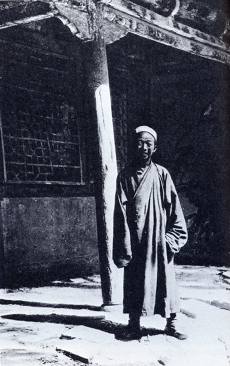
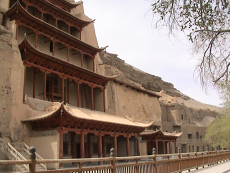
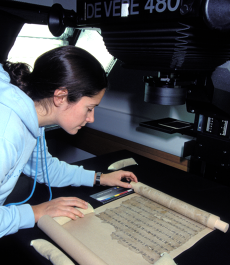
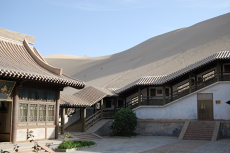
A Taoist monk sweeping sand from a cave corridor accidentally opened a sealed chamber that contained the greatest manuscript discovery of the twentieth century. Wang Yuanlu, a self-appointed guardian of the Mogao Caves near Dunhuang in western China, broke through a hidden wall in Cave 17 around June 1900, revealing a small room packed floor to ceiling with approximately 50,000 manuscripts, paintings, and printed documents dating from the fourth to the eleventh centuries. The Mogao Caves are a complex of nearly 500 Buddhist temples carved into a cliff face along the ancient Silk Road. Monks had used them for meditation and worship for more than a thousand years, decorating them with elaborate murals and sculptures. Cave 17 had been sealed around the year 1000, possibly to protect its contents during a period of political instability, and then forgotten for nine centuries. The collection was staggering in its scope and significance. Among the manuscripts was a copy of the Diamond Sutra dated 868 AD, the oldest known printed book in the world. The library contained Buddhist scriptures in Chinese, Tibetan, Sanskrit, and other languages, along with Confucian and Taoist texts, business contracts, government records, musical scores, and astronomical charts. The documents preserved a cross-section of Silk Road civilization at its peak. Wang reported his discovery to local officials, who showed little interest. In 1907, the Hungarian-British archaeologist Aurel Stein arrived and persuaded Wang to part with thousands of manuscripts for a modest donation to the caves’ restoration. French sinologist Paul Pelliot followed the next year and selected the most valuable pieces. By the time the Chinese government ordered the remaining manuscripts transported to Beijing, roughly half the collection had been dispersed to museums in London, Paris, St. Petersburg, and Tokyo, where it remains today.
June 25, 1900
126 years ago
Key Figures & Places
What Else Happened on June 25
The Burgundians crushed the Frankish army at the Battle of Vézeronce, securing a temporary reprieve for their kingdom against Merovingian expansion. This victor…
The Burgundians thought they had allies. They didn't. At Vézeronce in 524, the Frankish forces under Chlodomer's brothers crushed the Burgundian army — but Chlo…
Three brothers tore the Carolingian Empire apart in a single afternoon. At Fontenay-en-Puisaye, Charles the Bald and Louis the German crushed Lothair I's forces…
Venetian galleys destroyed a larger Genoese fleet at the Battle of Acre during the War of Saint Sabas, a conflict between Italian merchant republics over commer…
Authorities in the Swiss city of Schaffhausen tortured and executed thirty Jewish residents after accusations of blood libel, the recurring medieval falsehood t…
Seven German princes handed Charles V a document that was supposed to get them burned. Melanchthon wrote it — not Luther, who was banned from Augsburg entirely,…
Talk to History
Have a conversation with historical figures who witnessed this era. Ask questions, explore perspectives, and bring history to life.